
For a huge proportion of young talent, your ‘employer brand’ is not decided on your website… it is decided on Instagram and TikTok. And not just because of image: because of trust, values and signs of real culture.
Javier Ocaña Olivares Follow
Vendas, marketing e produtos, pré-vendas e compras na área de B2B
Link copied.
In 2026, social media ceased to be a means of communication and became part of the talent process infrastructure: attracting, filtering, validating and (if done correctly) retaining talent.
Here’s the twist: in 2026, social media became part of the talent process infrastructure: it attracts, filters, validates and (if you do it right) retains. And this idea does not come from a single source; it is repeated from various angles. Some recent data:
The practical consequence of this data is clear: if your networks are not connected to your processes (attraction, selection, onboarding, mobility), you lose talent before HR even knows it.
The relationship between talent and companies is changing rapidly. Generation Z demands proof, not promises; it seeks real content where it spends its time (TikTok and Instagram) and trusts people’s experiences more than perfect corporate messages. Added to this is an ecosystem where social search, employee voice and AI are redefining how a job opportunity is discovered, evaluated and communicated.
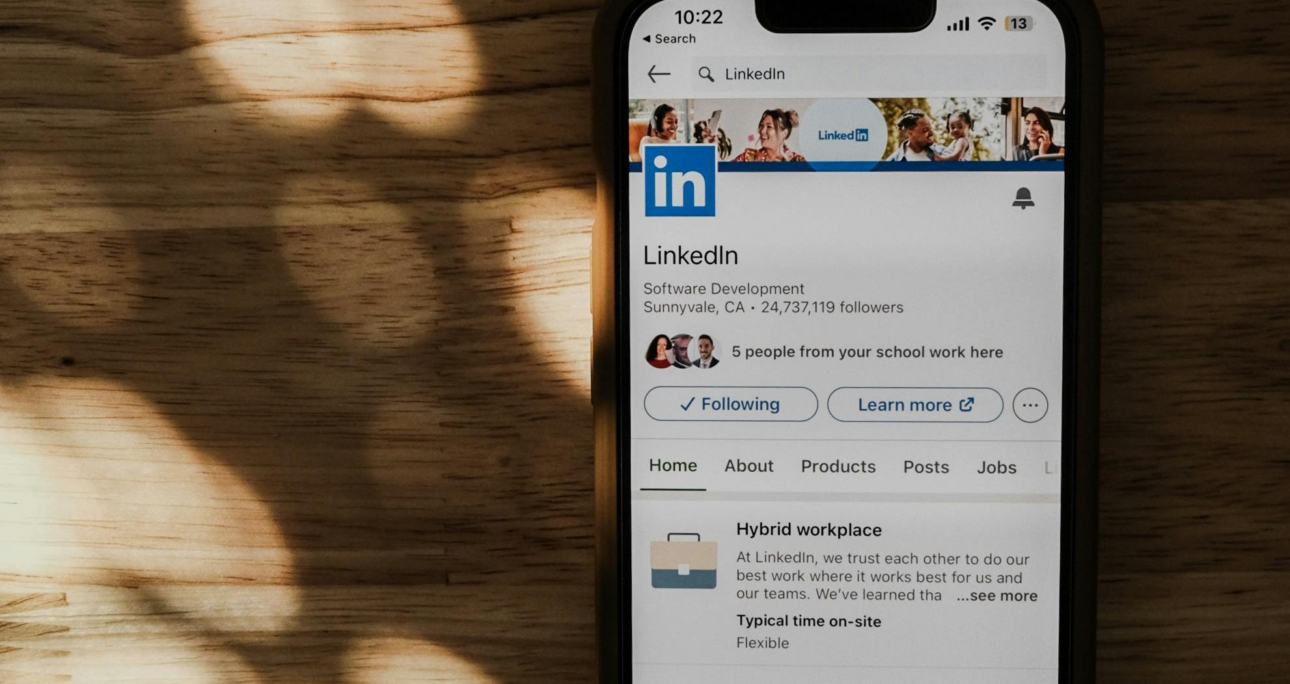
This circumstance does not eliminate the importance of LinkedIn: it simply redefines its role. In this new scenario, LinkedIn remains key for credentials, roles and professional community, while other channels gain weight in discovery and cultural proof. Understanding this balance — and adapting to it — is now part of the new employer branding.
To that end, here are five trends that define ‘where employer branding is headed’ in 2026 and what you can apply starting tomorrow.
Generation Z is not satisfied with claims. They want proof.
In the Zety report, the content that most increases the likelihood of them applying includes (among others): company achievements (62%), work culture (61%), ‘a day in the life’ videos (50%) and DEI initiatives (48%).
How to apply it tomorrow
What not to do
Don’t ‘dress up’ culture with creativity. If the inside doesn’t match, the contrast will be detected in comments, reviews, and private conversations.
This is not ‘a nice alternative.’ It’s mass behaviour:
And I reiterate that the correct interpretation is not: ‘abandon LinkedIn’. It means: if your target audience includes early career / junior professionals, you’re already behind if you only play on LinkedIn.
How to apply this tomorrow
Design your funnel by platform:
Real (and growing) risk
Hootsuite raises this as one of the trends: content must be adapted to multimodal discovery (search + recommendations + consumption signals).
At the same time, Metricool reinforces the ‘data-first’ approach: its recent study (10/12/2025) analyses more than 39 million posts and over a million accounts, insisting that ‘data reveals the truth’ about formats and behaviour.
How to apply it tomorrow
Rewrite job/culture posts with ‘human searches’ in mind:
In its 2026 trends, Hootsuite explicitly includes: ‘Employee involvement extends reach while bolstering authenticity’ (employee advocacy).
This fits with the demand for ‘human and real’ and with the fatigue of ‘perfect’ corporate content.
If your staff participates, reach is not the only thing that increases: credibility also rises.
How to apply it tomorrow
Advocacy programme with three rules:
What not to do
At Telefónica, initiatives such as Telefónica Creators allow our employees to immediately share different articles on digitalisation and the progress of society and businesses through valuable, relevant and real information about their daily work projects.
In the workplace, Randstad points out that in 2025, job offers requiring ‘AI Agent’ skills skyrocketed by 1,587% and that 21% of workers believe that AI will not impact their tasks, while 47% fear that it will benefit the company more than them.
On the content layer, Sprout Social highlights (08/12/2025) that AI-generated content will become increasingly common, but also warns about trust: in its Q3 2025 Pulse Survey, 52% of users are concerned if brands publish AI-generated content without disclosing it.
How to apply it tomorrow
Separate ‘AI for production’ from ‘AI for decision-making’.
In 2026, competing for talent is no longer just about posting a job offer and waiting. It’s about understanding where people make their decisions.
Generation Z makes decisions based on what they see and what they can verify: everyday culture, how a team works, what a person learns, how mistakes are discussed, what values are practised. That’s why ‘employer branding’ is becoming less like a message and more like a set of tests. (zety)
Furthermore, social media is no longer just ‘content for followers’. It functions as a search engine, a research tool and a filter. If someone wants to know ‘what it’s like to work at X’ or ‘what Y does’, they will look for it in short, human and repeatable formats. And that’s where TikTok and Instagram carry more weight for discovery and cultural proof, while LinkedIn retains the ground of credentials, roles, and professional community. (Social Marketing Dashboard, zety)
And all this is happening in a market that is much more demanding in these types of processes: caution in hiring, different expectations between companies and talent, and a context where AI appears both in job offers and in conversation. In this environment, trust is the asset. And trust is earned through transparency: in what you publish, in how you involve your employees, and in how you use AI — especially if you automate communication with candidates. (Indeed Hiring Lab, Randstad, Sprout Social)
Your website can explain who you are. But your feed is where talent decides whether to believe you.
And if you don’t connect it to your process, talent isn’t ‘lost’ at the end. It leaves at the beginning.
Share it on your social networks
Link copied.
Newsletter
Thank you for your sending
We have just sent you an email to confirm your subscription. If you are already subscribed to any of our sections this email will not reach you.
Word of the week
ICT
Most read in the last week :: TOP 5
Telefónica
Telefónica
Javier Ocaña Olivares
Marta Machicot
Related Content
AI in talent selection: how to improve recruitment, reduce bias and enhance the candidate experience
Elena Parreño Turrión
How Artificial Intelligence Is Transforming the employee experience: The new driver of productivity, talent, and innovation in businesses
Belén Espejo
How Artificial Intelligence is impacting employment and transforming the global labor market
Vanessa Plaza
Communication
Contact our communication department or requests additional material.
AUTOR
Thank you for your sending
We have just sent you an email to confirm your subscription. If you are already subscribed to any of our sections this email will not reach you.
Deliver the best digital experience to our customers.
Your talent process no longer competes on job portals: it competes in the feed – telefonica.com
Related Posts
 set 21, 2026
 set 21, 2026
 set 20, 2026
