Latest
AI
Amazon
Apps
Biotech & Health
Climate
Cloud Computing
Commerce
Crypto
Enterprise
EVs
Fintech
Fundraising
Gadgets
Gaming
Google
Government & Policy
Hardware
Instagram
Layoffs
Media & Entertainment
Meta
Microsoft
Privacy
Robotics
Security
Social
Space
Startups
TikTok
Transportation
Venture
Staff
Events
Startup Battlefield
StrictlyVC
Newsletters
Podcasts
Videos
Partner Content
TechCrunch Brand Studio
Crunchboard
Contact Us
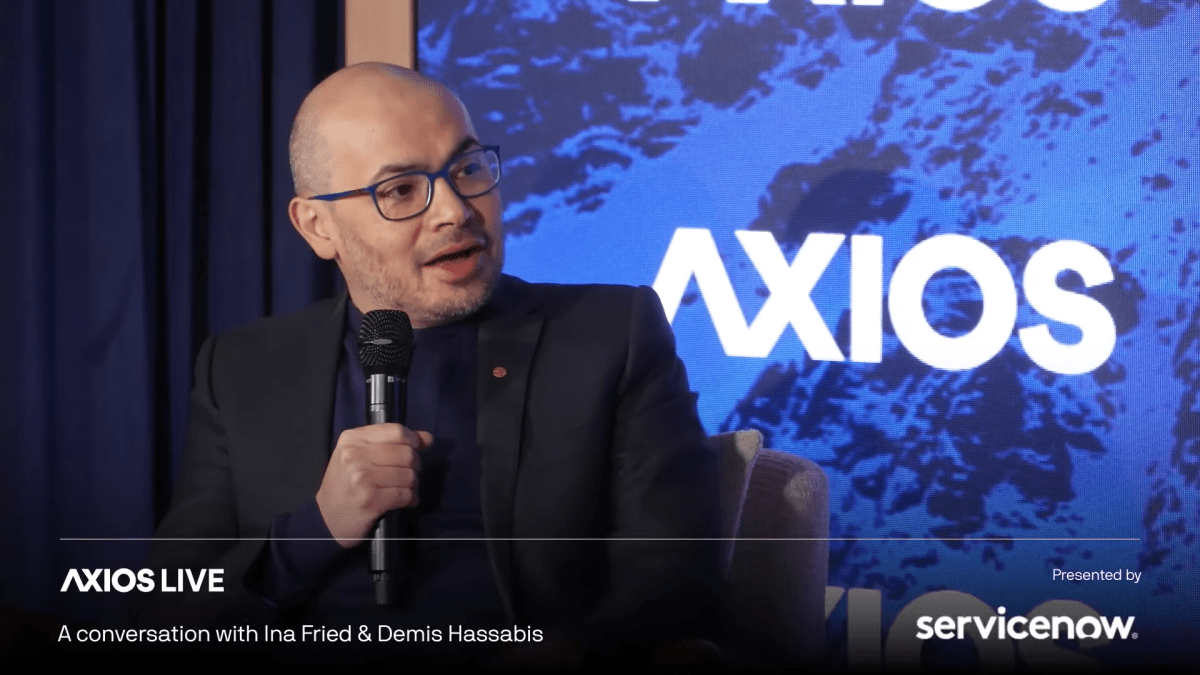
Google DeepMind CEO Demis Hassabis said he’s “surprised” that OpenAI has already moved to introduce ads within its AI chatbot. In an interview with Axios at Davos, the AI leader was responding to a question about using ads to monetize AI services, saying the idea is something that the team at Google was thinking through “very carefully.”
Hassabis also said that his team wasn’t feeling pressure from the tech giant to make “a knee-jerk” decision around advertising, despite how key ads are to Google’s core business.
The DeepMind co-founder’s remarks followed Friday’s news that OpenAI will begin testing ads as a way to generate additional revenue from the portion of the AI chatbot’s 800 million weekly active users who don’t have a paid subscription.
While OpenAI may have been forced to consider ads, considering its growing infrastructure and energy costs, its decision could change how users view the service.
“I’m a little bit surprised they’ve moved so early into that,” Hassabis said, referring to OpenAI’s adoption of ads. “I mean, look, ads, there’s nothing wrong with ads…they funded much of the consumer internet. And if done well, they can be useful,” he clarified.
“But in the realm of assistants, and if you think of the chatbot as an assistant that’s meant to be helpful — and ideally, in my mind, as they become more powerful, the kind of technology that works for you as the individual…there is a question about how ads fit into that model?… You want to have trust in your assistant, so how does that work?” he questioned.
Reiterating some early comments from another Davos interview, Hassabis also said that Google didn’t have “any current plans” to do ads in its AI chatbot. Instead, the company would monitor the situation to see how users respond.
Of course, we’ve already seen consumer backlash to the idea of ads infiltrating people’s conversations with AI assistants. When OpenAI last month began exploring a feature that suggested apps to try during users’ chats, for instance, people reacted negatively, saying these suggestions felt like intrusive ads. Shortly after, OpenAI turned off the app suggestions, which it claimed were not actually ads as they had “no financial component.”
But whether or not money had exchanged hands was not what made users angry. Rather, it was how the app suggestions degraded the quality of the experience.
That’s something that also concerns Hassabis, his remarks suggested.
He explained that using a chatbot is a much different experience than using Google Search. With Search, Google already understands a user’s intent, so it can show potentially useful ads. Chatbots, on the other hand, are meant to become helpful digital assistants that know about you and can help you with many aspects of your life, he said.
“I think that’s very different from the search use case. So I think there, that has to be thought through very carefully,” he added.
Making Gemini more useful to each user is also the focus of newly launched personalization features announced today for Google’s AI Mode. Now, users can opt into having Gemini’s AI tap into their Gmail and Photos for tailored responses in Search’s AI Mode, similar to how Gemini’s app just added a Personal Intelligence feature that can reference users’ Gmail, Photos, Search, and YouTube history.
While personalized ad targeting is a business that sustains the free web, pushing an ad on the user while they’re in a conversation with an AI assistant can feel off-putting. It’s why customers rejected Amazon’s earlier attempts to infuse ads into its Alexa experience — they wanted an assistant, not a personal shopper hawking things for them to buy.
Hassabis said he wasn’t feeling top-down pressure to force ads into the AI product, either, though he admitted there may be a way to do them right later on.
“We don’t feel any immediate pressure to make knee-jerk decisions like that — I think that’s been the history of what we’ve done at DeepMind — is be very scientific, and rigorous, and thoughtful about each step that we take — be that the technology itself or the product,” he noted.
Topics
Tickets are live at the lowest rates of the year. Save up to $680 on your pass — and if you’re among the first 500 registrants, score a +1 pass at 50% off.
Meet investors. Discover your next portfolio company. Hear from 250+ tech leaders, dive into 200+ sessions, and explore 300+ startups building what’s next. Don’t miss these one-time savings.
Anthropic’s CEO stuns Davos with Nvidia criticism
SpaceX didn’t properly inspect crane before collapse at Starbase, OSHA says
Well, there goes the metaverse!
Sequoia to invest in Anthropic, breaking VC taboo on backing rivals: FT
Why Silicon Valley is really talking about fleeing California (it’s not the 5%)
AI cloud startup Runpod hits $120M in ARR — and it started with a Reddit post
© 2025 TechCrunch Media LLC.