 By Anthony Vargas
Meta teased new ad optimization offerings as it touted solid Q1 results on Wednesday.
It also hyped its investments in AI agents and its launch of a standalone AI app this week, while hinting at monetization opportunities for these products.
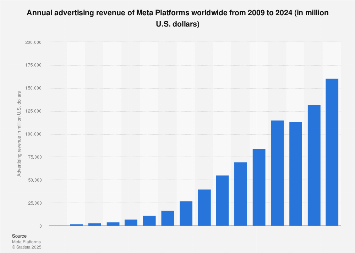
Meta reported $42.3 billion in Q1 revenue, a 16% year-over-year increase.
Its family of apps – including Facebook, Instagram, WhatsApp and Threads – accounted for $41.9 billion of the quarter’s earnings. Almost all app revenue – $41.4 billion – came from advertising.

As of Q1, 3.4 billion users are using at least one of Meta’s apps daily, up 6% YOY. Ad impressions for the quarter were up 5% YOY, and average price per ad increased 10%.
What’s driving Meta’s ad revenue growth? Why, AI of course. Meta CFO Susan Li pointed to an increase in demand from advertisers spurred by improved campaign performance from Meta’s AI recommendation engines and creative tools.
The company’s road map going forward includes – what else – more AI product releases, CEO Mark Zuckerberg told investors. And Meta is particularly interested in how AI can continue to improve its ads business – so look forward to more black-box campaign optimization.
“Our goal,” Zuckerberg said, “is to make it so that any business can basically tell us what objective they’re trying to achieve, like selling something or getting a new customer, and how much they’re willing to pay for each result, and then we just do the rest.”
The runaway AI hype train
It can’t be overstated just how over-the-top Zuckerberg was on this earnings call about AI’s potential to improve advertising.
“AI has already made us better at targeting and finding the audiences that are interested in their products than many businesses are themselves,” Zuckerberg said. “And now, AI is generating better creative options for many businesses as well.”
Get our editors’ roundup delivered to your inbox every weekday.
He added that, if Meta delivers on its vision for specialized AI agents that can optimize campaigns, “the increased productivity from AI will make advertising a meaningfully larger share of global GDP than it is today.”
That’s a lot of big talk, but Meta shared some numbers that demonstrate its AI tools are producing some respectable results for advertisers.
For example, Meta started testing a new ad ranking module for Instagram Reels this quarter, which has increased conversion rates by 5%, Zuckerberg said.
And, over the course of Q1, the number of advertisers using Meta’s tools for generating ad creative grew by 30%. Such tools include a new feature that lets advertisers automatically adjust the aspect ratio of video ads to fit different formats by generating new pixels in each video frame.
Meta is also testing a new incremental attribution feature with select advertisers, which has produced an average 46% lift in incremental campaign conversions, Li said. The company plans to open this feature up to all advertisers in the coming weeks.
Monetizing AI and organic content
In addition to boosting ad performance, Meta’s recommendation algorithms are also boosting organic engagement on its apps. In the past six months, improvements to content recommendations yielded a 7% increase in time spent on Facebook, a 6% increase on Instagram and a 35% increase on Threads.
These improvements have particularly increased user engagement with video. Li touted that video consumption across Facebook and Instagram grew by double digits compared to Q1 2024.
With those improvements in mind, “we are now in the video era,” Zuckerberg said. Where have we heard that one before?
On top of monetizing more video impressions, Meta is also looking for ways to monetize its standalone Meta AI product, for which the company launched a dedicated app this week.
“Our focus for this year is deepening the experience and making Meta AI the leading personal AI with an emphasis on personalization, voice conversations and entertainment,” Zuckerberg said.
He added that, eventually, “we’re all going to have an AI that we talk to throughout the day” and that such AI assistants are “going to be one of the most important and valuable services that has ever been created.”
Wait a minute – are we talking about Meta’s AI bots that use John Cena’s voice to talk dirty to researchers claiming to be minors?
Apparently so. Zuckerberg said Meta will follow its usual playbook when it comes to finding monetization opportunities for these voice-enabled chatbots. These opportunities could include product recommendations and ads, as well as premium subscriptions, he said. But, he added, “we’re going to be largely focused on scaling and deepening engagement for at least the next year before we’ll really be ready to start building out the business.”
Ditto when it comes to expanding advertising on Threads, which Meta opened up to advertisers earlier this month.
“As we do for any newly monetized surface, we expect to gradually ramp ad supply as we optimize the ad formats and ensure they feel native to the app,” Li said. However, she added, “We don’t expect Threads to be a meaningful driver of overall impression or revenue growth in 2025.”
To those who knew him, John “JG” Gentry wasn’t just a CEO. He was a colleague who showed up with genuine care and curiosity.
The group that turned header bidding software into an open standard is bringing the same approach to publisher-side AI agents.
Meta is channeling its booming ad revenue into a $135 billion AI drive to power its “personal superintelligence” future.
Most publishers have no idea that a major part of their video ad delivery will stop working on April 30, shortly after Microsoft shuts down the Xandr DSP.
Ads were going to be a “last resort” for ChatGPT, OpenAI CEO Sam Altman promised two years ago. Now, they’re finally here. Omnicom Digital CEO Jonathan Nelson joins the AdExchanger editorial team to talk through what comes next.
This Wednesday marks the beginning of Hershey’s first major brand marketing campaign since 2018
The group that turned header bidding software into an open standard is bringing the same approach to publisher-side AI agents.
Advertisers are still figuring out what value ChatGPT’s ads may offer. Are LLMs the next frontier for search, or a new channel entirely?
The brands seeing the greatest lift from Andromeda have adjusted not by outsourcing judgment to the algorithm but by refining their creative strategy. Here are three best practices to keep in mind.
To those who knew him, John “JG” Gentry wasn’t just a CEO. He was a colleague who showed up with genuine care and curiosity.
Supply-path optimization may not be the trendiest three-letter acronym in ad tech anymore, but the SPO trend is still playing out – especially in the CTV category. Which explains why Xumo, the TV and streaming distributor jointly owned by Comcast and Charter, announced on Thursday that it is integrating with OpenPath, The Trade Desk’s direct-to-publisher […]
Join the AdExchanger Community
AdExchanger is where marketers, agencies, publishers and tech companies go for the latest information on the trends that are transforming digital media and marketing, from data, privacy, identity and AI to commerce, CTV, measurement and mobile.
Convergent TV World
March 5-6, 2026
The Times Center
New York, NY
Learn More
© 2026 Access Intelligence, LLC – All Rights Reserved