
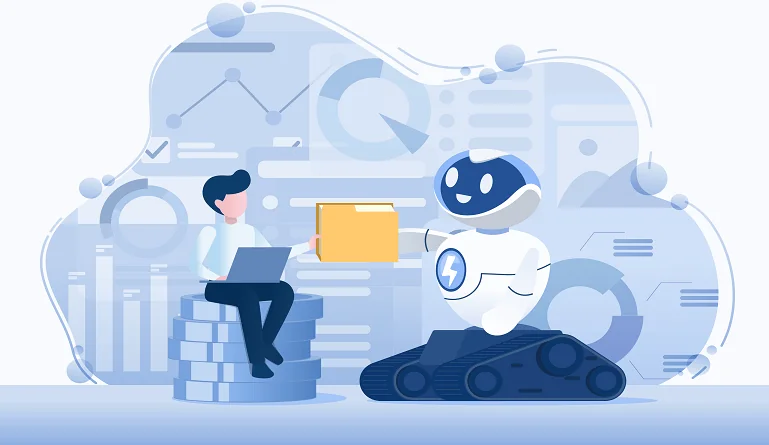
AI marketing is not just a buzzword. In today’s competitive landscape, marketers are increasingly turning to artificial intelligence (AI) to optimize their campaigns and improve return on investment (ROI). AI-driven insights can help businesses make more data-informed decisions, enhance customer experiences, and streamline operations.
Start by gathering data from various sources like social media, website visits, and purchase history. AI tools can process this data to identify patterns and common traits among your audience. This helps in creating well-defined segments based on factors like age, location, and buying behavior. For instance, AI-powered segmentation can improve conversion rates by up to 30% by targeting the right audience.
Once you have segmented your audience, AI can help tailor your marketing messages. Personalized campaigns are more likely to engage customers. For example, if you know a segment prefers eco-friendly products, you can focus your messaging on sustainability. Personalization can lead to a 20% increase in customer satisfaction and a 15% increase in sales.
AI can refine your targeting by continuously analyzing data and learning from customer interactions. This means you can adjust your campaigns in real-time to improve accuracy. Accurate targeting ensures that your marketing budget is spent on the right people, increasing your ROI. AI-driven predictive analytics can help reduce wasted ad spend by up to 25%.
Machine learning models analyze historical data to predict future actions. These models can forecast what products a customer is likely to buy next or when they might make a purchase. This allows you to craft campaigns that are timely and relevant. Predictive analytics can boost conversion rates by up to 20%.
Not all customer segments are created equal. Some are more likely to convert than others. AI can identify these high-converting segments, allowing you to allocate your ad spend more effectively. This reduces waste and boosts your ROI. AI-driven ad optimization can lead to a 30% increase in ROI.
AI doesn’t just look at your data; it can also analyze market trends. By understanding trends, you can adjust your marketing strategies proactively. This keeps your brand relevant and ensures that you are meeting customer needs as they evolve. AI can help anticipate market trends, leading to a 25% increase in sales.
AI can create content tailored to each segment of your audience. Tools like GPT-4 can write emails, social media posts, and even blog articles. This personalization increases the chances that your audience will engage with your content. AI-generated content can reduce content creation time by up to 70%.
Personalized content is more likely to resonate with your audience. When customers feel understood, they are more likely to engage with your brand. This increased engagement can lead to higher conversion rates and, ultimately, a better ROI. Personalized messaging can increase engagement by up to 50%.
Creating content manually is time-consuming and resource-intensive. AI tools can automate this process, freeing up your team’s time for other tasks. This efficiency can lead to cost savings, further boosting your ROI. AI can save up to 60% of the time spent on content creation.
AI can map out the entire journey a customer takes, from initial contact to final purchase. This detailed map helps you understand where customers drop off and what keeps them engaged. Knowing this can help you refine your marketing strategies. Customer journey mapping can increase customer retention by up to 20%.
By analyzing the customer journey, AI can pinpoint stages where customers face issues. Addressing these pain points can improve the customer experience and increase the likelihood of conversion. AI can also identify opportunities to upsell or cross-sell, further increasing ROI. Identifying pain points can lead to a 15% increase in customer satisfaction.
Understanding the customer journey helps you create better post-purchase experiences. Satisfied customers are more likely to return and make repeat purchases. High retention rates are crucial for long-term ROI. AI-driven customer retention strategies can increase retention rates by up to 25%.
AI can deliver personalized content in real-time, based on customer interactions. For example, if a customer browses a particular product, AI can show related items immediately. This dynamic content keeps customers engaged and drives higher conversion rates. Real-time personalization can increase conversion rates by up to 20%.
Real-time personalization enhances the customer experience by making it more relevant. Recommendations based on browsing history or past purchases make customers feel understood. This relevance can lead to higher satisfaction and loyalty. Relevant recommendations can increase customer satisfaction by up to 15%.
AI allows you to adapt your marketing strategies on the fly. If a campaign isn’t performing well, you can make adjustments in real-time. This agility ensures that your marketing efforts are always optimized for the best possible ROI. Real-time adjustments can lead to a 10% increase in ROI.
( Also Read: Artificial Intelligence (AI) for Marketers: A Beginner’s Guide )
Programmatic advertising uses AI to automate the ad buying process. Instead of manually purchasing ads, AI platforms handle everything. This method is faster and more efficient. It allows for real-time bidding on ad spaces. The AI evaluates millions of data points to decide the best ad placements.
AI can analyze user behavior in real time. This ensures that ads reach the right audience at the right time. It looks at factors like browsing history, location, and even the time of day. This precision means more effective ads and higher engagement rates. For instance, AI can increase click-through rates (CTR) and conversion rates by up to 50% through targeted advertising.
By targeting the right audience, AI reduces wasted ad spend. Ads are shown to potential customers who are more likely to convert. This maximizes your return on investment (ROI). You spend less money on people who aren’t interested in your product. AI can reduce media wastage by ensuring ads reach only relevant users, thereby cutting costs associated with ineffective impressions.
AI can adjust prices dynamically. It looks at market demand, competitor pricing, and other factors. This helps you stay competitive. For example, if demand for a product spikes, the AI can increase the price. Conversely, if competitors lower their prices, the AI can respond accordingly.
AI can also personalize pricing for different customer segments. It analyzes data to find out what different groups are willing to pay. This allows for targeted pricing strategies. Higher prices can be set for segments willing to pay more. Discounts can be offered to price-sensitive customers.
By optimizing prices, AI helps increase both sales and profit margins. Dynamic pricing ensures you are neither overpricing nor underpricing your products. This balance leads to more sales and higher profits.
Continuously Monitor and Adjust Campaigns Using AI
AI can continuously monitor ad campaigns. It tracks performance metrics like click-through rates (CTR) and conversion rates. Based on this data, it makes real-time adjustments to improve performance. This continuous optimization ensures that your campaigns stay effective.
AI helps achieve better ad placements. It analyzes which platforms and times yield the highest engagement. Ads are then placed where they are most likely to be seen and clicked. This results in higher CTR and more effective use of your ad budget. AI can improve CTR and view-through rates (VTR) by targeting the right audience and predicting campaign performance.
By optimizing ad placements and targeting, AI maximizes your return on ad spend (ROAS). It ensures that every dollar spent on advertising yields the highest possible return. This makes your marketing efforts more cost-effective. AI can increase ROAS by 50% or more by optimizing advertising spend and impact.
AI in marketing is highly effective. It automates complex processes, making them more efficient. AI helps in targeting the right audience, optimizing ad spend, and adjusting pricing. These actions result in higher engagement rates, more sales, and better ROI.
Yes, AI marketing is worth it. It offers a high ROI by reducing wasted ad spend and increasing targeting precision. AI also provides valuable insights that can be used to refine marketing strategies. The initial investment can be high, but the long-term benefits outweigh the costs.
AI is not likely to replace marketers. Instead, it acts as a tool that can enhance their capabilities. Marketers can use AI to handle repetitive tasks, allowing them to focus on strategy and creativity. AI provides data-driven insights, but human judgment is still crucial for decision-making.
Yes, you can make money with AI marketing. By optimizing ad spend and targeting, AI helps increase sales and profit margins. Dynamic pricing and continuous ad performance optimization also contribute to higher revenues. AI marketing makes your efforts more efficient and effective, leading to better financial results.
Step 1: Data Collection
Step 2: Data Preprocessing
Step 3: Choosing a Machine Learning Model
Step 4: Training the Model
Step 5: Evaluating the Model
Step 6: Implementing Segments
Step 1: Data Collection
Step 2: Text Preprocessing
Step 3: Choosing a Sentiment Analysis Model
Step 4: Training the Model
Step 5: Evaluating the Model
Step 6: Applying Sentiment Analysis
Step 1: Data Collection
Step 2: Data Preprocessing
Step 3: Choosing a Recommendation Algorithm
Step 4: Training the Model
Step 5: Evaluating the Model
Step 6: Implementing Recommendations
Insights for “Best AI for Marketing”
Tracking and analyzing customer behavior patterns is crucial. AI algorithms can identify what customers like and dislike by examining their interactions. These insights help in personalizing marketing campaigns, boosting conversion rates. For instance, AI-powered customer insights can increase conversion rates by up to 6 times compared to non-personalized campaigns.
First, gather data from various touchpoints such as websites, social media, and emails. Use AI tools like Salesforce Einstein to analyze this data. Look for patterns in browsing history, purchase behavior, and engagement metrics. AI models can segment customers based on these patterns, making it easier to tailor marketing strategies.
Once you have segmented your customers, personalize your marketing efforts. Use the insights to send targeted emails, personalized offers, and relevant content. This approach increases the likelihood of conversion. For example, if a customer frequently browses electronics, send them offers related to the latest gadgets. AI platforms like Persado AI can analyze user interactions to optimize the timing, content, and targeting of marketing campaigns.
Targeted marketing leads to higher conversion rates, which in turn boosts revenue. Personalized offers and content resonate more with customers, making them more likely to make a purchase. Over time, this approach can significantly increase your overall revenue. Studies have shown that personalized email campaigns can increase revenue and transaction rates by up to 6 times compared to non-personalized campaigns.
Predicting the lifetime value (CLV) of a customer helps in focusing resources on high-value customers. AI models can predict CLV by analyzing customer data.
Feed your customer data into AI models to predict CLV. These models consider factors like purchase frequency, average order value, and customer engagement. The predictions help in identifying customers who are likely to generate more revenue over time. AI tools like Mixpanel’s Spark AI can provide data analytics insights by asking questions, facilitating data democratization across organizations.
Once you’ve identified high-value customers, allocate more resources to them. Tailor your marketing strategies to retain these customers. Offer them exclusive deals, early access to new products, and personalized communication. This approach maximizes long-term profitability.
AI can help identify customers at risk of churning. By understanding who might leave, you can take steps to retain them.
Use AI models to analyze customer behavior and identify those at risk of churning. Look for signs like reduced engagement, lower purchase frequency, and negative feedback. These indicators help in pinpointing customers who might leave. AI can predict future customer behaviors and preferences, enabling businesses to anticipate and meet customer needs proactively.
Once identified, implement retention strategies. Reach out to these customers with personalized offers or incentives to stay. Improve customer service and address any issues they might have. Regularly check in with them to ensure they are satisfied.
Effective churn prevention strategies increase customer loyalty. By addressing issues early and offering personalized solutions, you can reduce churn rates. This approach not only retains customers but also builds long-term loyalty.
AI-driven predictive analytics can optimize marketing campaigns. By predicting outcomes, you can allocate resources more efficiently.
Feed historical campaign data into AI models. These models can predict the success of future campaigns based on past performance. Use these insights to tweak your campaigns for better results. AI-powered customer insights can help businesses anticipate customer needs and proactively address pain points.
Based on AI predictions, allocate your marketing budget more effectively. Focus on channels and strategies that are likely to yield the best results. This approach ensures that you get the most out of your marketing spend.
AI-driven sentiment analysis helps in understanding customer opinions about your brand. This insight is crucial for managing your brand reputation.
Use AI tools like Hootsuite Insights and Brandwatch to analyze customer reviews, social media comments, and feedback. These tools can gauge the sentiment behind customer opinions, whether they are positive, negative, or neutral.
Based on sentiment analysis, take steps to improve your brand perception. Address negative feedback promptly and highlight positive reviews. Engage with your customers to show that you value their opinions. This approach helps in building a strong brand reputation.
By leveraging AI-driven customer insights, businesses can make informed decisions that boost ROI. From analyzing behavior to predicting churn, AI helps in optimizing every aspect of marketing.
( Also Read: Embracing AI in Marketing )
Transparency is key when using AI in marketing. Customers need to know how their data is used. Clear communication about AI processes builds trust. Explain how AI makes decisions. Offer details on data sources and algorithms. This helps customers feel informed and respected. Transparency in AI decision-making is underscored by the necessity for marketers to disclose how AI systems operate, ensuring consumers understand the basis on which AI makes predictions or recommendations.
Privacy is a major concern in AI marketing. Make sure to follow data protection laws. GDPR and CCPA set standards for handling customer data. Secure data storage and processing are essential. Regular audits and compliance checks help maintain these standards. Ensuring robust data protection measures to safeguard customer information from unauthorized access or misuse is crucial.
Responsible AI use involves ethical considerations. Avoid biased algorithms. Ensure fairness in AI-driven marketing. Transparent and fair AI practices build long-term trust. Customers are more likely to engage with brands they trust. Fairness in AI is the extent to which the algorithm treats everyone equally without considering age, race, gender, religion, or personal preferences and characteristics.
Stay updated on new AI technologies. Machine learning and natural language processing are evolving. These technologies improve customer targeting and personalization. Keep an eye on advancements to leverage these tools effectively. For instance, recent advancements in machine learning have enabled more precise customer segmentation and personalized content creation.
Adopting new trends can give you a competitive edge. AI-driven chatbots enhance customer service. Predictive analytics improve campaign success rates. Early adoption of these trends can set you apart from competitors. A recent study highlighted the significant impact of AI-driven chatbots on customer satisfaction and engagement.
Digital marketing is constantly changing. AI is a big part of this evolution. Prepare for shifts in customer behavior and technology. Adapt your strategies to stay relevant. Continuous learning and flexibility are key. The integration of AI into marketing, advertising, customer service, and customer experience presents a new frontier filled with opportunities and ethical dilemmas.
There are many AI marketing tools available. Tools like HubSpot, Marketo, and Salesforce offer AI features. These tools help with customer segmentation, content personalization, and more. Review each tool’s capabilities to find the best fit for your needs. For example, HubSpot’s AI-powered tools can help in creating personalized content and automating marketing processes.
Each AI marketing tool has unique features. Compare them based on your goals. Look at ease of use, integration, and cost. Evaluate how each tool can enhance your marketing efforts. Choose tools that align with your objectives. A comparison table for AI marketing tools, including features, benefits, and costs, can be a valuable resource for making informed decisions.
Selecting the right tool is crucial. Consider your marketing needs and budget. A tool that works well for one company might not suit another. Test different tools to see which one fits best. Make informed decisions to maximize ROI. Ensuring that the chosen tool aligns with your marketing strategy and ethical considerations is essential.
Several companies have successfully used AI in their marketing. For instance, Netflix uses AI for content recommendations. Amazon employs AI for personalized shopping experiences. These examples show the potential of AI in marketing. A recent case study on Netflix’s AI-driven content recommendation system demonstrated significant improvements in user engagement and satisfaction.
Successful AI marketing campaigns share common traits. They use data effectively. They focus on personalization. They also continually optimize their strategies. Analyze these aspects to understand why these campaigns worked. The success of these campaigns often hinges on the ethical use of AI, ensuring transparency, accountability, and fairness.
Learn from successful AI campaigns. Incorporate best practices into your strategies. Focus on data quality and personalization. Regularly review and adjust your campaigns. These lessons can help improve your AI marketing efforts. By following responsible practices, marketers can ensure that AI positively impacts the digital marketing landscape.
AI has limitations. It relies on data quality. Poor data leads to poor AI performance. AI also struggles with understanding context in some cases. Recognize these limitations to set realistic expectations. The ethical use of AI in marketing requires balancing personalization and privacy, ensuring that AI systems operate within the boundaries of societal values and respectful consideration of potential impacts on human lives.
Implementing AI marketing comes with challenges. Integration with existing systems can be tough. High costs and lack of expertise are common issues. Address these challenges by planning and investing in training. Ensuring that AI applications are managed in a manner that upholds standards such as fairness and accountability is crucial.
Overcome AI marketing challenges with clear strategies. Invest in quality data management. Train your team on AI tools and techniques. Consider partnering with AI experts. These steps can help you navigate the complexities of AI marketing. By prioritizing transparency and accountability, businesses can ensure that AI is used ethically in marketing, promoting consumer trust and regulatory compliance.
AI marketing can refine your audience targeting, optimize ad spend, and personalize content. It helps with real-time ad buying, dynamic pricing, and sentiment analysis. These tactics are designed to boost your ROI and enhance customer satisfaction.
By leveraging AI, you unlock actionable insights, improve campaign performance, and build stronger customer relationships. It’s about making data-driven decisions that lead to higher efficiency and profitability.
So, what AI tactic will you implement first to elevate your marketing strategy? Start today and see the difference it makes.
Revolutionizing Content Creation: AI-Driven Strategies for 2024
Mastering AI Implementation: A Guide for Marketing Teams
13 AI-Powered Marketing Automation Tools
Harnessing Generative AI in Marketing for Creatives
Danni White | Danni White is the CEO of DW Creative Consulting Agency, a digital marketing firm specializing in elevating the visibility of small-to-midsize businesses and nonprofits. She is the author of 17 books and hosts the #Hashtags and Habits Podcast, which merges digital marketing, entrepreneurship, and personal growth.
Danni White | Danni White is the CEO of DW Creative Consulting Agency, a digital marketing firm specializing in elevating the visibility of small-to-midsize busi…
Thank you for participating! Click below to receive your gift card.
Reach out to info@techfunnel.com if you do not receive the gift card.
5 Research-Driven AI Marketing Tactics to Boost ROI – techfunnel.com
Related Posts
 fev 6, 2026
 fev 6, 2026
 fev 6, 2026
