
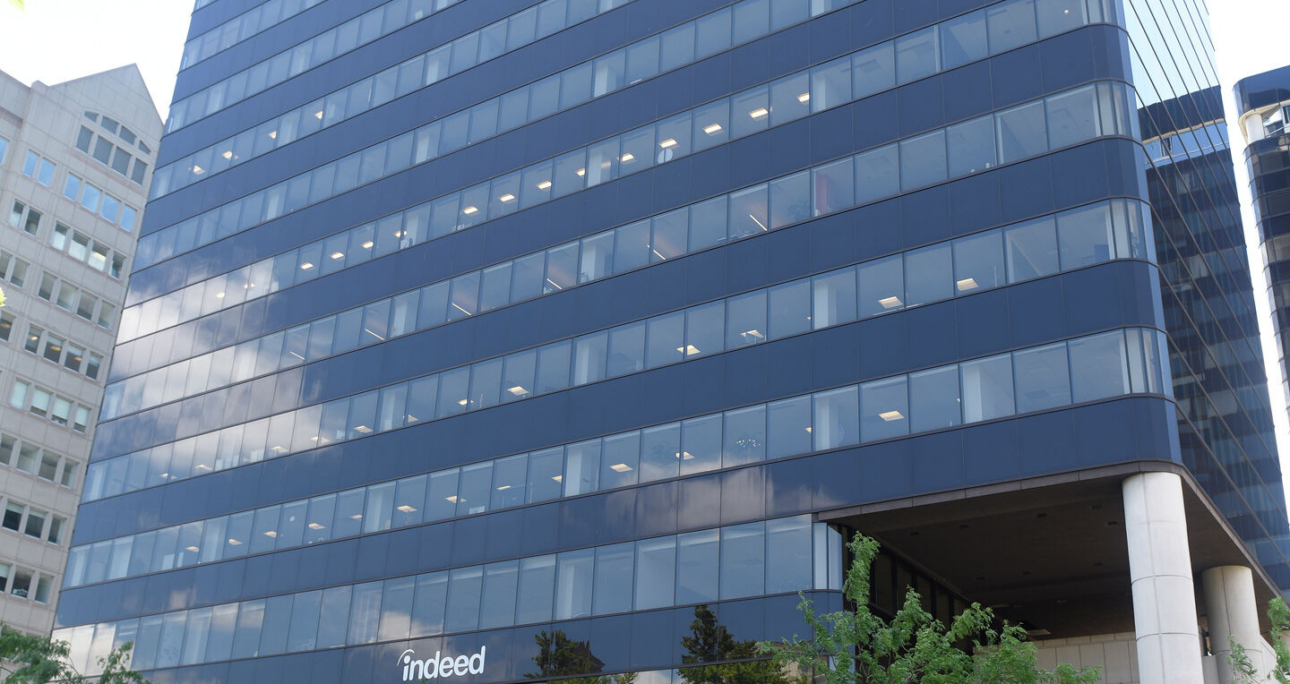
The 177 Broad St. office building in Stamford, which was purchased in December 2025 by Stamford-based RMS Cos. with plans to convert the building to apartments.
An office building at 200 Connecticut Ave. in Norwalk, in January 2026. A developer plans to renovate the top floors into apartments, keeping offices on the lower levels.
With a downtown Stamford office building next in line to be converted to apartments, several more in lower Fairfield County could qualify for incentives under a Connecticut fund for the purpose — if owners choose to make the investments after coming up empty in landing office tenants.
RMS Cos. is planning to convert Indeed’s longtime office building at 177 Broad St. to apartments, after purchasing the property in December for $13.1 million. Indeed is moving its Stamford office next month to 200 Elm St., with Stamford functioning as a dual headquarters along with Austin, Texas.
Advertisement
Article continues below this ad
CEO Randy Salvatore told CT Insider the 177 Broad St. building was at a moment in time right for a conversion, with Indeed’s departure leaving it empty and so allowing work to begin upon city approvals. Salvatore added that not every office building can be used as an apartment building based on its architecture and existing lease contracts.
“Apartments need windows, whereas offices don’t in the interiors — so that knocks out a lot of buildings already,” Salvatore said. “You also have to look at the lease expirations. Let’s say you are 25% (occupied) in a 10-story building, but you have a tenant on the second floor and a tenant on the fifth floor and a tenant on the sixth — you can’t really do it. Everything has to align to make it work.”
Gov. Ned Lamont’s administration is readying a “greyfield” fund to convert struggling commercial buildings to apartments, whether offices, retail centers and hotels. Several office buildings in lower Fairfield County would qualify under basic guidelines enacted into law last year by the Connecticut General Assembly.
Advertisement
Article continues below this ad
The Connecticut Department of Economic and Community Development has yet to set a timeline for any application process for the program, a DECD spokesperson told CT Insider. The state’s budget includes $20 million in possible incentive dollars for the 2026 fiscal year ending in June, with $30 million eyed for fiscal 2027.
Salvatore said RMS does not intend to apply for 177 Broad, saying renovations will begin once Indeed relocates. RMS has undertaken multiple residential conversions the past several years in Connecticut, including at XL Reinsurance America’s former office at 68 Seaview Ave. slated for condominiums.
To qualify for funding under the new Connecticut program, developers must be able to show that their office buildings have had vacancy rates of at least 50% of leasable space over the preceding 12 months. In addition to grants or loans, developers would get a three-year grace period from any municipal revaluation of a property that has been converted to residential use.
Advertisement
Article continues below this ad
The Norwalk-based commercial real estate advisory firm Choyce Peterson publishes a semiannual review of vacancies in more than 90 office buildings in Stamford, Greenwich, Norwalk and Westport. In its 2025 review published last week, five offices appear as no longer available for leases, in preparation for conversion to offices, in Norwalk at 101 and 201 Merritt 7 and 535 Connecticut Ave. in Norwalk; and 120 and 800 Long Ridge Road in Stamford.
“It’s taken Fairfield County longer than other markets to start converting these buildings, but the trend has now been set,” said Choyce Peterson principal John Hannigan. “We anticipate additional buildings over the next two-to-three years to be converted to other uses such as multifamily residential, healthcare, and/or fitness. The current owner or a new developer will either knock the building down or convert the existing structure to a new use.”
While combined office availability in the four municipalities dropped for the first time in a decade, several buildings are at least half empty today, according to Choyce Peterson, including in Stamford at 300 Atlantic Ave. and 107 Elm St. downtown owned by affiliates of RFR Realty. This month, RFR touted recent 300 Atlantic Ave. renovations, with the goal of attracting office tenants to the downtown building at the corner of Tresser Boulevard.
According to the Choyce Peterson survey, also half empty or more are 208 Harbor Drive at Shippan Landing; 1600 Summer St.; and 6 High Ridge Park just off the Merritt Parkway.
Advertisement
Article continues below this ad
In Norwalk, a developer has put forward a plan to convert two of the six office buildings at Merritt 7 into 300 apartments. Building facades would be updated and surrounding parking lots converted into green parks, along with an outdoor swimming pool.
Other Norwalk office buildings with vacancies above 50% include 800 Connecticut Ave.; 801 and 901 Main Ave. in the Towers complex; 20 Glover Ave.; and 401 Merritt 7.
Five miles south, the top floors of an office at 200 Connecticut Ave. are slated for a residential conversion, with offices to remain on the lower levels.
Hannigan said that some Fairfield County office buildings are essentially in limbo in the context of leasing, as owners — or lenders which have taken back the buildings — deliberate on whether they will renovate, convert to another use, or refinance.
Advertisement
Article continues below this ad
“Some tenants are leaving these buildings when their leases expire,” Hannigan said. “There’s two scenarios here: one, the owner or lender who has possession of the building is not renewing tenants on a long-term basis and also not showing available space to potential tenants, even though there are vacancies and it is currently being operated as an office building; and two, brokers are not bringing clients to some buildings because of a possible future loan default or building conversion. There’s a lot of moving parts going on in this market under the radar, so to speak.”
Staff writer Robert Marchant contributed to this report, which also includes prior reporting by Sandra Diamond Fox, Rob Ryser and Paul Schott.
Alexander Soule is a staff writer with Hearst Connecticut Media focused on business, development and the Connecticut economy. Alex is a Maine native who served a two-year enlistment in the U.S. Army before attending Connecticut College. Before joining Hearst Connecticut, Alex started a growth economy website called Enterprise CT chronicling Connecticut startups, with previous work including the Fairfield County Business Journal, the Boston Business Journal, the Rochester Business Journal, Mass High Tech, InsuranceTimes and the MIT Sloan School of Management at the Massachusetts Institute of Technology.
About
Contact
Services
Account
CT incentives could spur office-to-apartment conversions in Fairfield County – CT Insider
Related Posts
 fev 8, 2026
 fev 8, 2026
 fev 8, 2026
