Advertisement
Member article
This content is produced by a member of The Drum Network, a paid-for membership club for CEOs and their agencies who want to share their expertise and grow their business.
January 26, 2026 | 7 min read
Listen to article 4 min
B2B marketing is changing in unexpected ways. Alison Michael of Sköna examines the trends currently powering the shift.
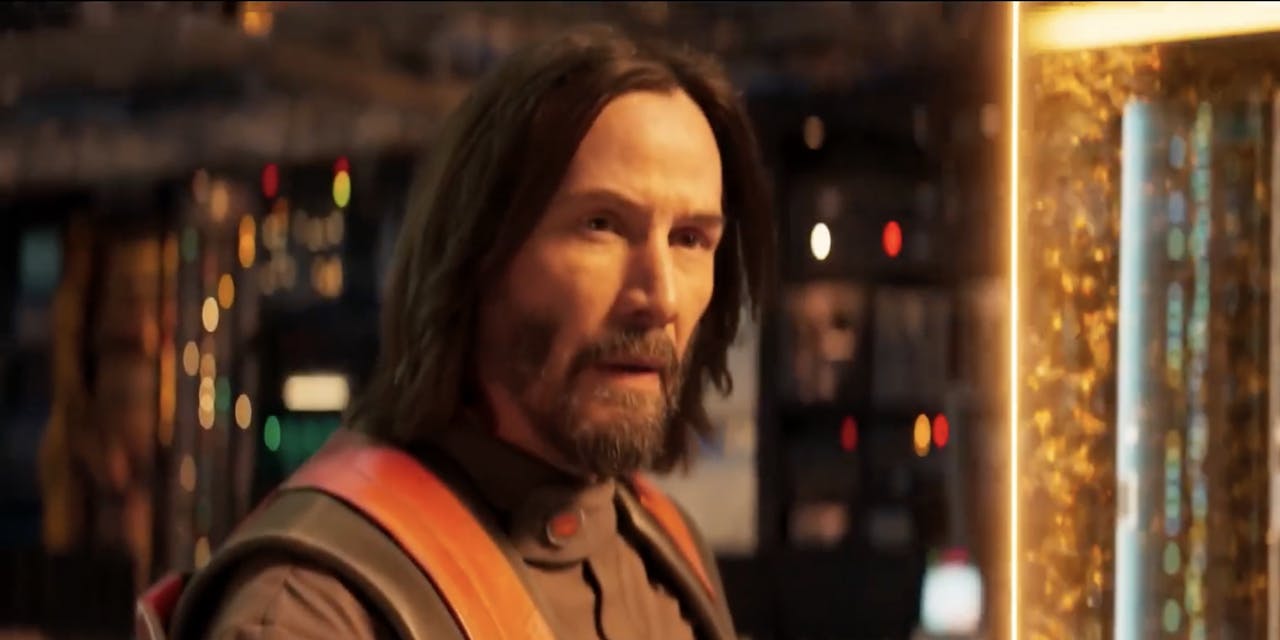
While we’ve seen big-name celebrities appear in B2B ads, Michael says more subtle partnerships are on the horizon (Palo Alto Networks/Youtube)
For years, B2B marketing and all of our clients have talked about transformation. In 2025, the industry finally started to walk the walk. What emerged wasn’t louder or flashier; it was smarter. Here’s what that means for B2B marketing in the year ahead.
Celebrity has long been a staple of B2C advertising, but in B2B, it’s historically been treated as nothing more than a huge flex. Too often, an A-list name signals budget more than insight. When it’s misaligned, the backlash can outweigh the buzz. Look no further than the ire Salesforce received in 2023 for paying Matthew McConaughey millions while simultaneously laying off thousands of employees.
But not all celebrity cameos have been a pure shock-value play. In 2024, we saw ServiceNow lean on the “charisma, charm, [and] trust ” of Idris Elba to market their platform. Similarly, Palo Alto Networks tapped Keanu Reeves to represent its fight against cybersecurity threats.
Advertisement
As 2025 comes to a close, the industry is contending with a different problem: saturation. The explosion of AI-generated content has created a flood of what many marketers admit is ‘AI slop.’ It’s technically competent, emotionally hollow, and instantly forgettable. Authenticity and storytelling have become harder to fake and more valuable than ever. As a result, in the year ahead, we’re going to see more subtle and strategic uses of celebrity talent.
Early achievers in this trend include examples like Atlassian’s campaign with Zach Woods and Ramp’s recent activation with Brian Baumgartner from TV show The Office. In both cases, while the celebrity profile was smaller (and therefore less costly), the activations themselves were more humorous and used levity in clever ways, particularly by tapping into deep fandoms. Expect this approach – lower wattage, higher relevance – to become a go-to strategy in crowded B2B markets.
Last year, the control employees may have felt over their working lives in the pandemic era was very much back in the hands of employers, many of whom took full advantage. We saw a rise in return to office mandates, calls for a brutal ‘996’ work schedule (9am to 9pm, six days a week), and continued tech layoffs. All of which, of course, was related to the dual forces of economic uncertainty and the promises of AI.
But with an overwhelming majority of AI implementations falling short of ROI dreams and a rise in ‘job hugging ’ – where employees stick around not because they’re particularly invested or engaged, but because they’re afraid to lose financial security – the pendulum is set to swing back towards brands elevating their efforts towards empowering their employees.
The fact is, recent studies have highlighted that increases in worker productivity due to AI also come with the less-than-desirable outcome that employee engagement decreases. And disengaged employees cost companies trillions.
As a result, 2026 will see more brands revamping their efforts to invest in their employees. AI consultancies will become line items leaned on to ensure workers are effectively trained on how to best leverage AI tools to be more powerful in their roles, not just more ‘productive.’
Advertisement
Big brands like Walmart, S&P Global, and IKEA are serving as first-movers in the pendulum’s return – it will be interesting to see who follows.
Events have always been important for B2B companies. In fact, in-person events were ranked as delivering the highest ROI for building brand awareness by 43% of B2B marketers. And in keeping with the larger trend of B2B implementing more B2C staple-strategies, 2026 is going to be the year B2B conference booths become the talk of the town.
Once again, we only have to turn toward the early adopters to see evidence that this trend train has left the station. Cannes saw activations from LinkedIn, Adobe, and Canva that spotlighted that B2B customers want the same social-media-worthy experiences as their B2C counterparts.
Advertisement
Similarly, Google’s $32bn acquisition of Wiz earlier this year goes to show that conference booth branding efforts are a winning strategy. The startup built a reputation for itself through highly creative booths that leaned into experiences like scavenger hunts, inside-joke-laden ‘grocery stores,’ and classic toys.
Similarly, I saw the same dynamic firsthand at Snowflake Summit, where Club Hex offered attendees the chance to get real tattoos. I opted out of the ink, but the impression stuck.
According to Forrester, volatility is the only thing we can be certain the year ahead will hold. The smartest B2B brands will respond not by retreating into safety, but by offering levity, confidence, and moments of genuine connection. In uncertain times, memorability isn’t frivolous; it’s a competitive advantage.
Sköna
Sköna is a B2B creative agency specializing in marketing, branding, and design for innovative tech companies. Founded in Silicon Valley in 2003 and with offices…
Advertisement
B2B marketing in 2026: subtle celebrity, empowered employees, and immersive experiences – The Drum
Related Posts
 jan 27, 2026
 jan 27, 2026
 jan 27, 2026