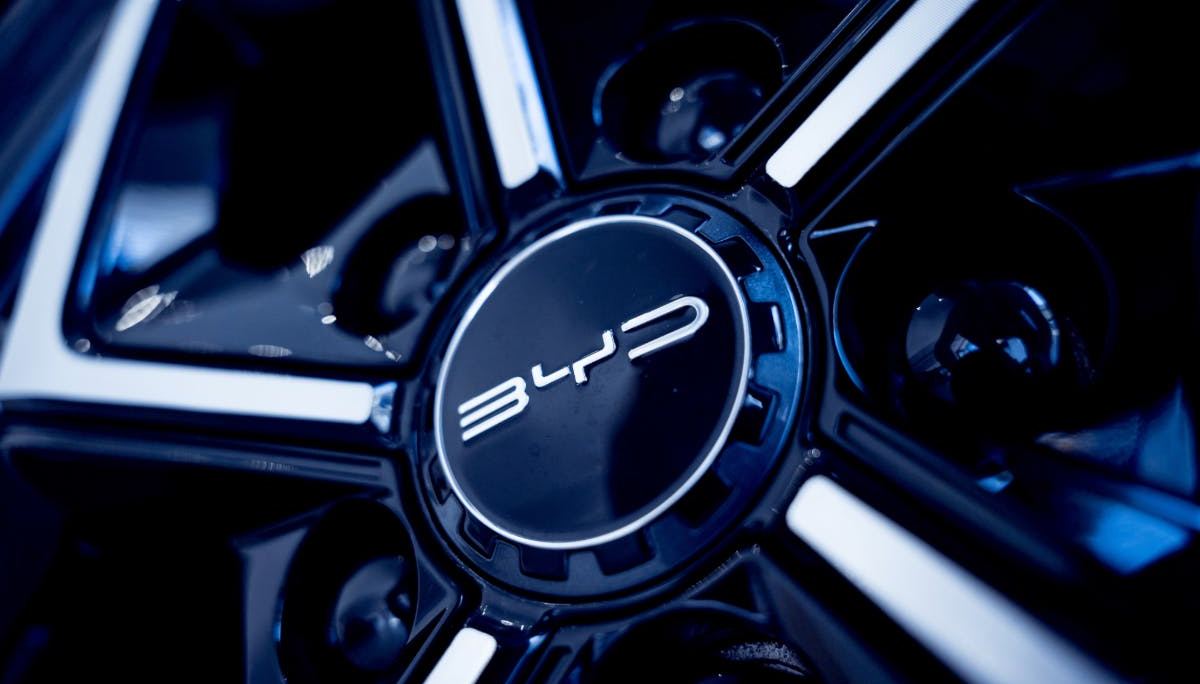
Chinese EV brand BYD has upped its use of TikTok as it looks to better connect with UK car buyers, taking it from a platform it had to “defend” to key stakeholders to something it would be “questioned for not doing”.
As a challenger brand hailing from China, BYD faced an uphill battle in terms of gaining market share in Europe. As an unknown entity in the UK, entering an increasingly crowded EV market, building brand awareness has been key.
BYD’s marketing mix leans heavily towards digital, with Meta, Google and TikTok forming a key part of its core always-on strategy, with paid social and search sitting alongside programmatic and YouTube.
As a challenger brand hailing from China, BYD faced an uphill battle in terms of gaining market share in Europe. As an unknown entity in the UK, entering an increasingly crowded EV market, building brand awareness has been key.
BYD’s marketing mix leans heavily towards digital, with Meta, Google and TikTok forming a key part of its core always-on strategy, with paid social and search sitting alongside programmatic and YouTube.
Traditional media still plays a supporting role, particularly outdoor and sponsorship around major launches. The brand also uses TV advertising sporadically, sometimes around the time of a launch but also to promote its flagship or most popular models.
“TikTok is now part of our always-on media mix,” David Wreford-Glanvill, head of paid media at BYD Europe, tells Marketing Week. “When I first joined [in June 2023], TikTok was something we’d use just for launches or big above-the-line campaigns. But the platform has grown so much — it now sits alongside Meta and Google as one of our big three.”
The European arm of BYD launched its TikTok account six months after Wreford-Glanvill joined. Since then, the platform has allowed it to build broader awareness and connect with a range of audiences, he says.
People come to TikTok to be entertained, not to be sold to.
As well as designing cars, BYD also makes batteries, buses and energy storage. As a result, Wreford-Glanvill says BYD views itself as a “global tech brand” rather than just a car marque, which is something it uses the platform to communicate. “TikTok lets us express that side of the business more creatively,” he explains. “It helps us show that BYD is about innovation and technology, not just vehicles.”
According to Wreford-Glanvill, TikTok’s format lets the brand show off its personality. “You can be freer with the creative [than on other platforms]. People want content that feels authentic, not overly polished. It forces us to think differently — you can’t just cut a 30-second TV ad into six and expect it to work.”
The brand runs awareness, consideration and lead-generation activity together, rather than separately, which Wreford-Glanvill says is “marketing 101”. “But a lot of brands still don’t do it,” he adds. “When you run all three together, you see better results everywhere.”
What the TikTok US deal means for brands and creators
That willingness to adapt has helped BYD build relevance fast. The brand estimates that around three-quarters of its TikTok activity involves creator collaborations rather than in-house production.
“Creator content always outperforms,” says Wreford-Glanvill. “It feels native to the platform. People come to TikTok to be entertained, not to be sold to.”
The brand has experimented with creators from skateboarders to cyclists, using them to demonstrate BYD’s technology in everyday contexts. “We’ll show the car’s rotating touchscreen or battery tech, but we’ll do it through the lens of someone’s lifestyle.”
For BYD, the shift to performance marketing on TikTok has been driven in part by the platform itself. The launch of TikTok’s Automotive Ads and AI-driven targeting offer Smart+ means that original equipment manufacturers (OEMs) and dealerships can connect with customers who they might not have otherwise considered.
Wreford-Glanvill describes the automated ad placement and testing offer as a “game-changer”. “We’re getting more leads at a lower cost [than Meta], and we’ve managed to increase spend without losing efficiency, which we couldn’t have done six months ago.”
It took time to convince internal stakeholders of the relevance of being on TikTok, though, says Wreford-Glanvill.
“At the start, some people questioned why we were putting budget into TikTok when the cost per lead was higher than Meta,” he recalls. “But we stuck with it. After six to nine months, the numbers spoke for themselves.”
“We’re now seeing TikTok deliver a big volume of qualified leads, and it’s become a permanent part of our always-on strategy,” he adds. “It’s gone from something we had to defend to something we’d be questioned for not doing.”
We’re getting more leads at a lower cost, and we’ve managed to increase spend without losing efficiency.
Although paid activity remains dominant, accounting for roughly 95% of BYD’s reach on the platform, the brand’s organic presence is growing too.
“Organic growth takes time,” he admits. “We came into the market as a new brand, with a small team. To do organic properly, you need people producing TikToks regularly. But we’re getting there. We’ve got partnerships coming that’ll boost that growth further.”
For TikTok, BYD’s success is proof that the automotive industry is rediscovering its creative confidence.
“Auto brands were once the most exciting advertisers around,” says Kristina Karassoulis, head of auto brand partnerships at TikTok UK. “In the 1970s and 1990s, they set the bar for creative storytelling. Then it all got a bit predictable — cars driving on mountain roads, dramatic voiceovers. TikTok’s brought that spark back. You can make something imperfect but brilliant, and it’ll work.”
How EV brand BYD used targeted media to make its mark in Europe
The platform’s automotive team works directly with brands to shape campaigns that fit both tone and audience. “We want auto advertisers to think beyond car content,” Karassoulis adds. “Talk about travel, fashion, art, culture — that’s how you find new audiences. TikTok’s feed doesn’t care about categories; it cares about what people love.”
BYD is now looking for ways to make its content more culturally relevant. “We’d love to do something that taps into a UK cultural moment,” says Wreford-Glanvill.
“You see brands like Specsavers or Aldi do that so well — fast, witty, totally on-brand. It’s harder in automotive because the planning cycles are longer, but that’s what we’re aiming for.”
As a largely unknown brand in EMEA, the electric car company used programmatic platforms to help drive awareness in five markets.
Marketing Week’s weekly round-up of the technology stories that impact the marketing sector: from AI to martech, regulation to public perceptions.
As the US and China edge closer to a deal, experts believe what happens next will be “critical to TikTok America’s success”.
Too many brands are still seeing creator marketing as a “bolt on”, according to TUI’s senior influencer marketing manager Hayley Shortman.
Suresh Balaji notes that AI advertising doesn’t matter if the user experience “falls flat”.
Consumer trust in advertising is up across every channel, with TV seeing the biggest gains, although the picture is “complex” and at times “contradictory”.
New guidelines developed by the Online Advertising Taskforce aim to help brands, agencies and media owners use AI effectively and ethically.
BYD on why TikTok is now a ‘permanent part’ of its always-on strategy – Marketing Week
Related Posts
 fev 6, 2026
 fev 6, 2026
![158 Digital Marketing Statistics 2026 [New Growth Data] – demandsage.com](https://rbtglobal.com.br/wp-content/uploads/2026/02/wp-header-logo-603-400x210.png) fev 6, 2026
fev 6, 2026