
Submit an inquiry
Prefer email? We’ll come back to you within 24 hours.
Book a demo
Ready to hear more?
Business
Access YouGov products and services as a business.
Members
Take surveys and earn points as a member of the YouGov panel.
Key findings:
TikTok is no longer a niche platform. Data from YouGov Profiles indicates that 40% of American adults currently use TikTok, which means many brands already have a meaningful TikTok audience, whether they planned for it or not.
But the bigger lesson isn’t necessarily “buy more TikTok ads.” TikTok users are more likely than non-users to discover products through creators and to like certain ad experiences. However, data indicates they can be reached through a wide variety of advertising channels, especially online.
TikTok use skews younger, but it isn’t limited to the youngest adults. In this dataset, 53% of Gen Z say they use TikTok, compared with 46% of Millennials, 40% of Gen X, and 26% of Baby Boomers. By gender, 45% of women say they use TikTok versus 34% of men.
This data suggests that TikTok is a strong way to reach Gen Z and millennials at scale but also reach a meaningful share of older consumers, which is useful for categories that aren’t “youth-only.”
When it comes to product discovery, TikTok users are similar to non-users in many ways. Recommendations from friends/family (51% vs. 50%) and browsing in retail stores (44% vs. 43%) are top channels for both groups.
TikTok users are most distinct in their reliance on online creators. Thirty-seven percent of TikTok users say they discover new products through social media influencers or bloggers, compared with just 23% of non-users.
TikTok users are also somewhat more likely to cite ads on websites or social platforms (44% vs. 39%) and online shopping marketplaces (42% vs. 38%). Meanwhile, they’re slightly less likely to cite search engines (38% vs. 41%).
The takeaway: TikTok users are still multi-channel, but they lean toward creator-led product discovery more than non-users.
When asked what kinds of advertising they like, TikTok users are more positive than non-users about every category of ad we asked about. The biggest difference comes in online advertising (apps, social networks, websites, email, etc) at 39% vs. 31%.
Some creator-adjacent advertising formats also show clear gaps. For example, 13% of TikTok users say they like influencer blogs/vlogs compared to 6% of non-users. For podcasts, it’s 15% vs. 10%.
Resistance to ads is also weaker among TikTok users. Only 19% say they like none of these ad types, versus 25% of non-users. That doesn’t mean TikTok users love every ad, but it suggests that, on average, they’re more open to advertising than the rest of the audience.
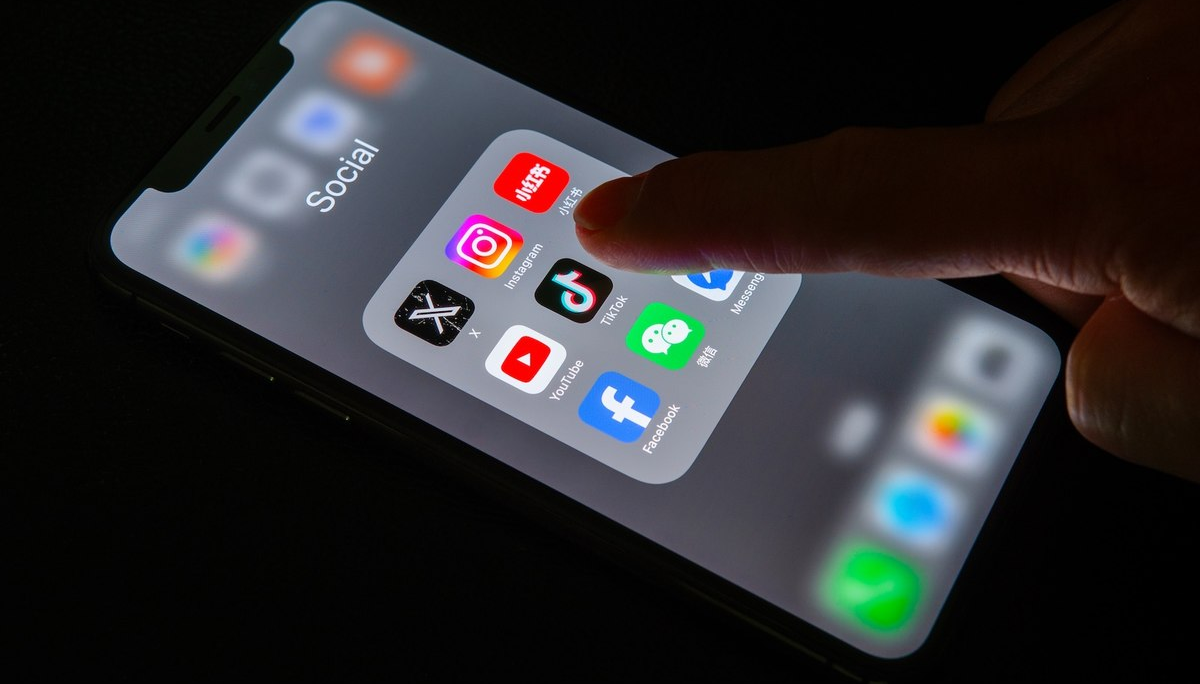
As the above data shows, TikTok is not the only place brands can reach TikTok users. This is even more true of social networks, with most users consuming content across several different platforms. For example, 85% of TikTok users also use YouTube, 83% use Facebook and 76%, Instagram.
That multi-platform user behavior supports a simple strategy: build one strong piece of creator-focused content, then adapt and distribute it across other social and video environments where TikTok users are also present.
Methodology
Methodology: This article uses YouGov Profiles data for the United States from a dataset dated Jan. 4, 2026, covering responses collected in the 12 months prior to that date. “TikTok users” are respondents who say they currently use TikTok; “non-users” are everyone else in the dataset. Results are based on survey responses and are intended to be representative of the U.S. adult population.
Our connected data ecosystem was built to bring answers to your burning questions.
At the heart of our company is a global online community, where millions of people and thousands of political, cultural and commercial organisations engage in a continuous conversation about their beliefs, behaviours and brands.
At the heart of our company is a global online community, where millions of people and thousands of political, cultural and commercial organisations engage in a continuous conversation about their beliefs, behaviours and brands.
Copyright © 2026 YouGov PLC. All Rights Reserved.
How brands can win with TikTok’s multi-platform audience – YouGov
Related Posts
 jan 27, 2026
 jan 27, 2026
 jan 27, 2026