
Artificial Intelligence (AI)
Anyone who has scrolled through social media in recent days has likely come across the same type of post.
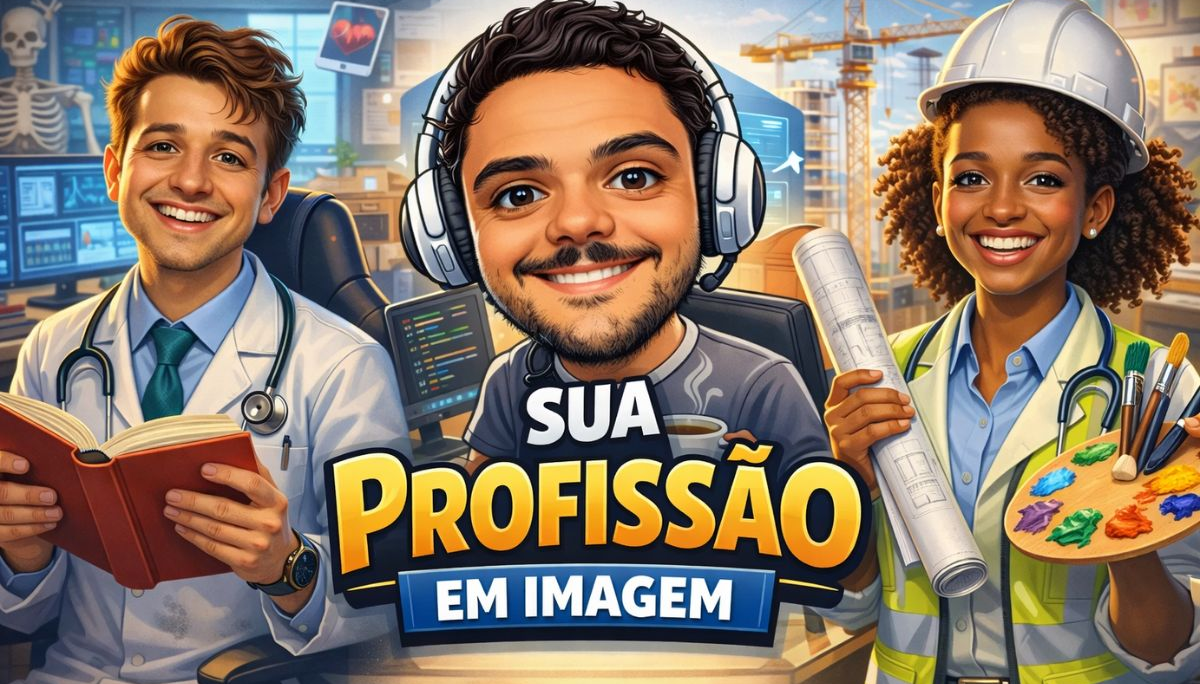
Digital caricatures depict people accompanied by objects and scenes associated with their professions and personal interests.
The images, in illustrated style, have been frequently circulating on platforms like Instagram, X, and LinkedIn, driven by the use of image generation features from ChatGPT.
Artificial intelligence is skyrocketing energy consumption, raising emissions from tech giants and pushing Google, Microsoft, and Meta closer to natural gas.
Mercor paid $1.5 million per day for doctors, lawyers, and former Goldman Sachs bankers to teach artificial intelligence to do their jobs, and in 17 months, it went from zero to $500 million in annual revenue while its own contractors accelerated the replacement of their own work.
Casio Unveils Moflin, Robotic Pet With Artificial Intelligence Designed To Provide Emotional Comfort And Simulate A Permanent Affectionate Bond
Google Maps Revolutionizes GPS Navigation With Gemini Artificial Intelligence, Ask Maps Feature, and Advanced 3D Visualization for Route and Travel Planning
The trend relies on the ability to create custom illustrations based on a photograph submitted by the user and written instructions within the chat itself.
As a result, the artificial intelligence tool produces a drawing that seeks to represent physical traits, professional activities, and, in some cases, hobbies mentioned in the command.
The feature is not new, but it gained recent visibility after users began sharing the results as avatars or personal introduction posts.
The format has been adopted in both personal and professional profiles, according to analyses published on technology-focused portals.
The process occurs within ChatGPT, both in the web version and the mobile application.
The user starts a conversation, attaches a photo using the file upload button, and then describes how they want the caricature to be generated.
The command can include direct references to the profession, work environment, and personal interests.
Based on this information, the system generates an illustrated image that attempts to combine the requested elements.
Tutorial on How to Do the Trend of Caricature of Your Work in ChatGPT. – Open a new prompt in ChatGPT – Attach your photos of your face and optionally also of your work to enhance the content of the generation – Use the prompt: “Create a caricature of me and my work based on everything you know about me.” – Add details of your profession if necessary and request new generations if needed – If the generated version doesn’t turn out well, use an image of another person as a reference for the style. Did you manage to generate your work caricature version? Let’s join the trend! #trend #caricature #chatgpt #work #ai
♬ Original Sound – Lucas Kalango
When the request is generic, the result tends to be broader and less specific.
According to recurring explanations from the tool itself, ChatGPT only uses the information provided in the conversation to create the image.
It does not access external data or consult profiles on social media to identify the user’s occupation.
For this reason, when the profession is not explicitly mentioned, the caricature may not accurately reflect the activity performed.
In requests that ask ChatGPT to use “previous conversations” as a basis, the result directly depends on the chat history.
If the user never provided their occupation, the tool does not have enough elements to represent it specifically.
In these situations, specialized guides recommend adjusting the command and clearly indicating the position, area of activity, or tasks performed.
Including objective information reduces the margin of interpretation of the tool.
Furthermore, very broad terms may generate generic representations.
Expressions like “administrative area” or “communication” usually result in less defined images than requests that specify functions, environments, or tools used in professional daily life.
The quality of the caricature is also related to the image used as a base.
Clear photos, with a well-lit face and few background elements, tend to make facial features easier to recognize.
Images with low resolution or containing multiple people may compromise the final result.
Experts in the use of generative artificial intelligence indicate that more detailed commands typically produce images more aligned with the user’s expectations.
Describing the desired style, setting, and the objects that should appear helps to guide the creation of the caricature.
When the drawing does not come out as expected, the recommendation is to refine the request, keeping essential information and correcting specific points.
The generation of images in ChatGPT is subject to restrictions, especially in the free version.
OpenAI generally informs that users of this plan have limited access and may face longer processing times.
The company does not publicly disclose a fixed number of images allowed per day.
Specialized reports indicate that these limits may vary according to demand and internal rules of the service.
Upon reaching the available ceiling, the user may need to wait for a period before generating new images again.
In paid plans, access tends to be broader, with a higher volume of generations allowed and shorter wait times.
Still, the exact criteria are not publicly detailed by the company.
The dissemination of caricatures is associated with the ease of creation and the visual appeal of the result.
The images serve as a quick form of personal presentation and are easily shareable.
This factor contributes to their circulation on social media.
The format also allows each person to highlight specific aspects of their professional journey and interests.
This helps explain why the trend has been adopted by both regular users and profiles geared toward the job market.
With the popularization of the feature, the phenomenon has also been observed as an example of how artificial intelligence tools represent professions and human activities.
Redatora e analista de conteúdo. Escreve para o site Click Petróleo e Gás (CPG) desde 2024 e é especialista em criar textos sobre temas diversos como economia, empregos e forças armadas.
© 2026 Click Petróleo e Gás – All rights reserved
Job Caricature Made by ChatGPT Becomes a Hit on Social Media, and Anyone Can Create Their Own in Minutes; Here's the Step-by-Step Guide – CPG Click Petróleo e Gás
Related Posts
 abr 11, 2026
 abr 11, 2026
 abr 10, 2026