
Mascots have long been dismissed as a B2C indulgence. But as B2B portfolios grow more complex and differentiation harder to sustain, character-led storytelling is emerging as an unexpected, and effective, strategic tool.
For years, mascots were treated as a line B2B brands simply shouldn’t cross. Too playful. Too consumer. Too unserious for industries built on engineering, precision, and performance. In sectors where credibility is hard-earned, anything resembling ‘fun’ was often seen as a liability. That thinking no longer holds.
The real challenge facing B2B marketing today isn’t credibility – it’s communication. As offerings expand across categories, regions, and applications, explaining complexity in ways that are both accurate and memorable has become increasingly difficult. The result is a sea of technical messaging that is correct, detailed, and, too often, easily forgotten. That gap is where mascots begin to matter.
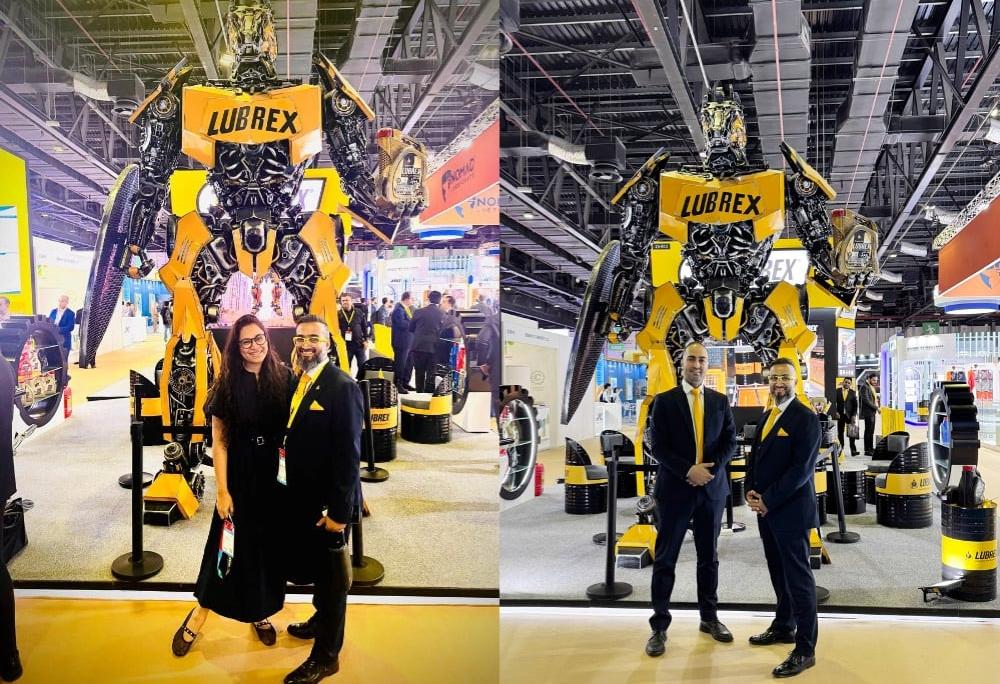
A defining milestone for me and my colleague Reza Zalaghi came in 2025, with the conceptualisation and launch of Lubtimus, our organisation’s first brand mascot.
The idea was not about drawing attention for its own sake. It was about creating a framework to organise complexity. A way to help people retain and understand what we do without oversimplifying it.
From the outset, it was clear that this had to be more than a visual asset. Lubtimus was designed to feel engineered rather than animated, visually inspired by machinery, components, and industrial structures. The character had to humanise technical depth without trivialising it – a balance that is essential in serious industries.
We treated the mascot as a narrative system rather than decoration. In practical terms, this meant Lubtimus became a consistent anchor in conversations, allowing discussions to move from individual products to broader ideas: performance, durability, protection, and long-term value. Simplification, I learned, does not mean removing depth; it means making depth accessible.
Several lessons extend well beyond the creation of a single character. First, emotional connection and technical credibility are not opposites. Even the most rational buyers rely on familiarity, recognition, and recall. Visual storytelling supports rather than replaces technical understanding.
Second, authenticity is critical. Characters in B2B must be grounded in the realities of the industry they represent. When they reflect real materials, processes, and engineering principles, they earn trust. When they do not, they fail quickly.
Third, mascots can align internal teams as much as external audiences. A shared storytelling framework helps marketing, sales, and technical teams communicate with greater consistency; something many organisations struggle to achieve.
Finally, creativity compounds. Specifications change, portfolios evolve, but strong brand memory builds over time. Storytelling assets, when done well, age far better than datasheets.
B2B audiences today are exposed to world-class branding daily, often outside their professional roles. Their expectations have shifted: they still demand substance, but they also expect clarity, originality, and coherence. Mascots won’t suit every organisation, but dismissing them because a category is ‘too serious’ is a misunderstanding of how people process information.
Serious decisions do not require dull communication.
From my experience, one truth is clear: people remember stories long after they forget catalogues. Sometimes, the smartest way to explain complexity is simply to give it a face.
My belief in storytelling did not originate in marketing frameworks or brand theory. It began much earlier, shaped by my father, Naiyyar Zaidi, a senior photojournalist who spent decades documenting politics, public life, and history through his lens. Growing up around journalism taught me that stories are not about embellishment; they are about clarity, context, and truth.
A single image, when framed correctly, can carry more meaning than pages of explanation. That lesson has stayed with me throughout my career and strongly influences how I approach communication in technical industries.
Mascots, at their best, serve a similar purpose. They are not shortcuts or distractions. They are tools for framing complex realities in ways people can understand, remember, and trust.
By Dayem Abbas Zaidi, Marketing Manager, Lubrex FZC
Top news, insights and analysis every week
© copyright 2025 CampaignME
© copyright 2018 CampaignME
Why B2B brands are finally embracing mascots – campaignme.com
Related Posts
 jan 26, 2026
 jan 26, 2026
 jan 26, 2026