
Fazer as melhores perguntas que desbloqueiam novas respostas para os desafios mais complexos do mundo do trabalho.
Ver mais
EY TV
EY Entrepreneur of The Year
EY Podcasts
EY Webcasts
Alertas Fiscais
EY Four Futures
A EY ajuda os clientes a criar valor a longo prazo para os stakeholders. Através da utilização de dados e tecnologia, os nossos serviços e soluções oferecem segurança e ajudam os clientes a transformar, a expandir e a operacionalizar os seus negócios.
Ver mais
AI
Cybersegurança
Digital Tax
Fique a conhecer os insights e os serviços da EY que ajudam a reestruturar o futuro do seu negócio.
Ver mais
Reunimos pessoas extraordinárias, como tu, para construir um melhor mundo de negócios.
Ver mais
New EYers 2026
Profissionais com experiência
Carreiras na EY-Parthenon
O nosso propósito é construir um melhor mundo de negócios. Os insights e serviços que prestamos ajudam a criar valor a longo prazo para os clientes, para as pessoas e para a sociedade, bem como a construir relações de confiança nos mercados de capitais.
Ver mais
Comunicado de Imprensa
EY reforça o partnership com aposta na área de Managed Services
17 jan. 2025EY Portugal
Comunicado de Imprensa
Portugal permanece no top 10 dos países mais atrativos na europa para investimento direto estrangeiro
17 set. 2024EY Portugal
No results have been found
Topics
General
People
Recent Searches
Trending
The AI moment is now: how businesses can ready their workforce
EY teams have learned a lot from advancing AI capabilities across the 150 countries in which the organization operates. Learn more.
ODS nos negócios | Insights, estudos de caso e serviços | EY – Global
Saiba como o seu negócio irá desempenhar um papel fundamental na concretização dos Objetivos para o Desenvolvimento Sustentável das Nações Unidas através dos <em>insights</em> sobre sustentabilidade, das pessoas e dos serviços da EY.
Select your location
Multidisciplinary professional services organization
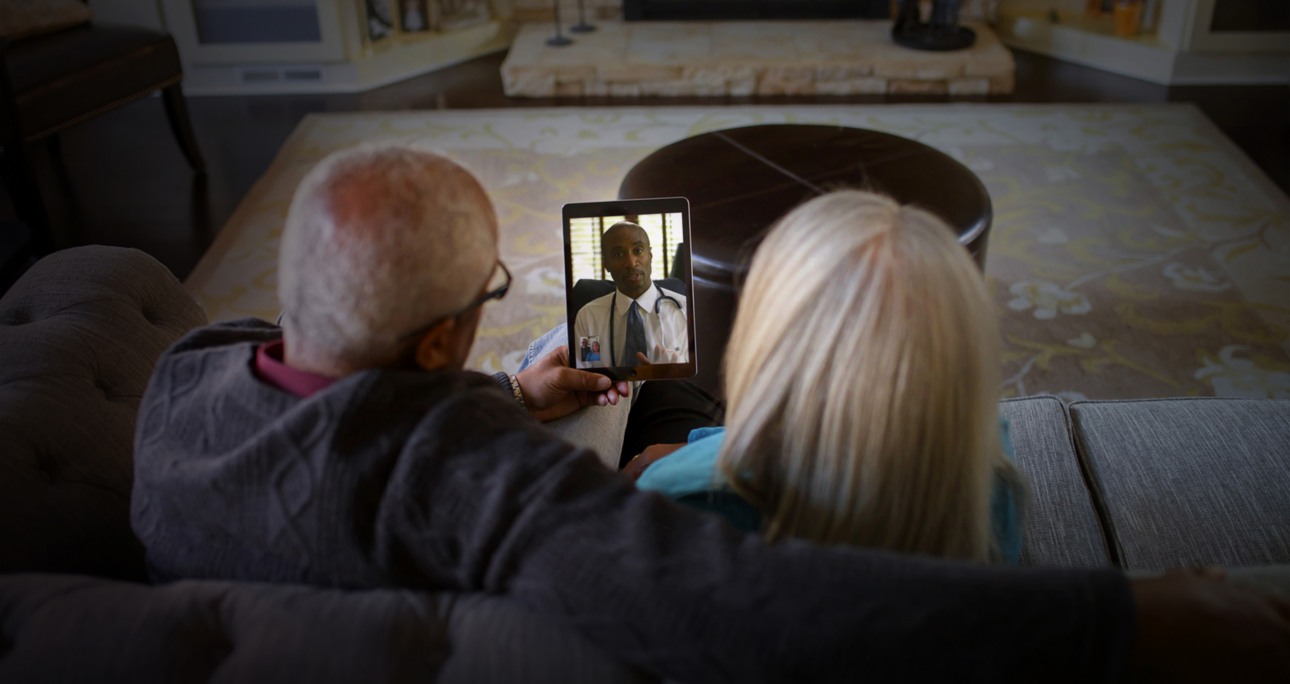
Technology-enabled innovation is accelerating the care models of tomorrow, many of which can only be imagined today. Technologies that enable, automate and engage consumers differently make possible a suite of new health solutions around well-being, remote care, smart homes and communities. Health care becomes about bringing care to the patient, rather than the patient to care, and this applies whether the person is at home, in the hospital, or anywhere in between.
But just changing information into a digital form falls far short of achieving the end goal of seamless and connected care. To move into the future, health systems and hospitals will need to become smart — highly technologically advanced and interconnected. Algorithms, through machine learning and artificial intelligence (AI), will create insight from aggregated user-generated and clinical data; robotics will reduce errors and improve reliability; and systems will be hyper-connected.
A new smart infrastructure will ultimately create a symbiotic relationship between the virtual and the physical (Figure 1). It is against this background that hospitals and health systems are looking to redefine themselves.
So, what does smart health look like? “As technology becomes smarter is your hospital keeping up?” discusses this and more.
When highly advanced technologies make possible the care models of tomorrow that are barely imaginable today, the result is smarter health care. To reach this state will require harnessing technologies for:
To bridge the information and communication gap between different stakeholders and care settings. This includes bringing together the right partners, defining collective and individual relative value and adopting partnering principles to support seamless integration, data flow, and scalability. This will result in better continuity of care, better care outcomes, and reduce overall system cost through minimizing duplication and waste. Overall, this will accelerate the shift from sick care to preventative and wellness-oriented care.
To deliver efficient and effective operations within the hospital setting, and to extend care beyond the hospital to connect and coordinate hospital-at-home care and well-being. This includes embracing automation, removing non-value-added activities, and adopting an evidence-based, data-driven analytical mindset for strategic planning and operational decision making.
To transform and modernize the end-to-end consumer and workforce experiences. By building trust, demonstrating empathy and understanding patients’ and employees’ preferences, values, behaviors and needs, health institutions will realize stronger engagement and higher stakeholder satisfaction, as well as ultimately better health outcomes.1,2
How EY can Help
As we build a combination of physical and virtual spaces, everyone and everything is connected. Embedded sensors in objects connect buildings and spaces, allowing control of the physical environments and easy location of equipment, materials and personnel. Connected systems collect, process, and distribute data. This allows for real-time intelligent decision making about people, the physical environments, and systems. In addition, user experiences are enhanced by seamlessly integrating information sources and having them available across many devices.
A digital backbone will underpin the smart health care system. This is a system-level infrastructure architecture that serves a three-part purpose: safe clinical care, appropriate automation of clinical and back‑office operations, and the delivery of personalized care and prevention. Core information systems, such as EHRs, imaging and laboratory systems, all form part of the broader data ecosystem.
Redesigning the way that services are delivered will transform how care is organized and experienced. Better alignment with consumers’ expectations and preferences brings a clear recognition that consumer and clinician experiences matter.
Rachel Dunscombe
CEO NHS Digital Academy
Health care will become further decentralized, as virtual care consolidates as a core service delivery platform in a digital-first delivery model. Taking advantage of the full scope of digital technologies to scale across health systems allows for new and alternative models built around very different ways of accessing care.
What this means
What this delivers
Hub and spoke
A smart hospital is the anchor in a hub and spoke model, connecting both traditional and non-traditional sites of care.
Hospitals form part of a larger system of ambulatory, retail, virtual, home, community and social care connected through platforms and virtual technologies.
Virtual hospitals: Bed-free and technology-rich, clinicians treat patients remotely, monitor vital signs and health status, and provide expert advice to patients and health professionals alike.
Patients are cared for in their local communities, saving time and travel. Scarce specialist expertise is available to those in remote and rural locations. A full spectrum of care is possible from eICU through to rehabilitation at home.
Hospital-at-home: Acute care is provided at home through a combination of clinical grade home technologies, remote monitoring, and coordinated at-home visits.
Care for conditions, such as acute exacerbations of COPD or asthma and community-acquired pneumonia, have been found to be safely treated at a lower cost and with a positive impact on patient satisfaction.3,4
Virtual consults: Telehealth platforms remotely connect patients and clinicians either by telephone or video.
Used extensively during the COVID-19 pandemic for triage screening of potential COVID-19 cases; acute visit and chronic condition management in lieu of or in addition to in-person visits, depending upon the clinical presentation.5
Remote specialist care Use cases exist for a range of specialties, including neurology, psychiatry, ICU, nephrology, infectious disease management and radiology.6
Clinician-to-clinician telemedicine can round out service gaps (for example, in psychiatry); bolster clinical capacity at adjacent, understaffed sites, as well as support health systems looking to extend their labor footprint beyond core campuses to broaden service mix and revenue opportunities.
Non-traditional players – entrepreneurs, retail organizations, life sciences, medtech, communications and technology companies see opportunities in consumer-driven health care, potential market size and prospects for growth.
Alliances that blend the technical capabilities of one partner with the health care expertise of another thrive in a new environment of partnerships, alliances, new locations and a consumerist-orientation. Health systems partner with retail clinics to offer virtual care or play a lead role alongside community groups in addressing the root causes of the social determinants of health (for example, through food and social housing programs).
Smart hospitals place consumer experience (before entering the hospital, during their stay, and after they leave) at the heart of their model design (Figure 2). In a smart hospital, the patient journey is reimagined as a digital-first experience. Through technology and automated features, patients are digitally engaged at every major step of their health care journey. Starting with a digital front door, the consumer experiences highly personalized information and guidance and is directed to the optimal care setting.
The workforce experience is modernized through AI-optimized workflows, remote collaborations and training, and seamless data sharing in real time between locations and with other members of the care team. Prediction of health care outcomes of interest at the individual patient level enables providers to intervene earlier, with curative or preventative interventions. Population health management and real-time data supporting operational decision-making at all levels become possible through AI-supported analytics. At the enterprise level, the organization itself, as well as the work culture, are transformed by the use of data and informatics that have not been previously available.
Figure 2: The end-to-end consumer experience
In a smart health system, technology intelligently facilitates the continuous improvement of processes, enhancing the patient journey, quality of care and overall efficiency. They are highly data-driven — data moves across the system, eliminating information silos and supporting the integration and alignment of care (physical, remote and virtual).9 Permissioned data sharing among all ecosystem partners enables a high-quality, efficient, convenient and precise health care delivery.10
Clinically accurate
Research suggests that, in some domains, AI now has a diagnostic accuracy rate comparable to that of human physicians.7 IoT and smart sensor technology collects and shares real-time data about patients, significantly improving patient outcomes.
Operationally efficient
Intelligent automation replaces high-volume, repetitive human activity and significantly boosts the overall productivity and accuracy of hospital care. Robots and drones replace error prone human activity, enable new medical procedures and improve speed and availability.8
Preventive and predictive
AI can give an early warning of deterioration through predictive modeling of data from existing patient-monitoring systems. Several health systems in the US, Canada and Europe have established AI-powered command centers (much like air-traffic control centers) that allow real-time monitoring of patients and help to synchronize care delivery, reduce errors and predict pressure points.9
Personalized and precise
Genomics and precision medicine, for example, enable an individualized approach to care, from the proactive diagnoses of illnesses using a personal genome, to tailored wellness and prevention interventions.
Participatory
Oriented around the person rather than the care setting.
Future proofing smart hospitals and wider health systems means a whole lifecycle approach to the design and operations of facilities and services. Designing flexible and adaptable structures ensures that they remain fit for purpose over the long-term and not only reduces the need for constant upgrades but delays obsolescence. Energy use, lifecycle duration, pollution controls, and reducing carbon footprints all shape the architectural and technical design briefs for smart health facilities.
Virtual health alone can’t address the current challenges and drivers of health. It is the union between the physical and virtual worlds that will make a difference.
Becoming smart means integrating into the wider ecosystem and creating a virtual care platform that integrates data through interoperable patient record systems and digital enablers such as IoT, 5G, AI, and remote monitoring. To sustain and capture value faster in this new model, the organizational culture of health systems will need to transition toward a more agile and responsive model. For some health systems, this transition will be a complete organizational transformation. For others, this will be incremental, targeting efficiency and patient experience improvement through digital enablers.
It is abundantly clear that the future of health is smart and that advances in smart technology, smart algorithms and smarter care models will shape the way care is delivered and experienced. This new frontier will allow us to deliver the right insights, to the right people, at the right time, leading to smarter, better informed and more cost-effective care for providers and patients.
Contributors: Emily Mailes, Director, Health Consulting, Ernst & Young – New Zealand; Sheryl Coughlin, PhD, EY Global Health Sciences & Wellness Senior Analyst; Ankur Sadhwani, EY Global Health Analyst.
Show article references
Interconnecting people, the environment, and infrastructure as a unified, intelligent, data-optimized system of care is the point where health becomes smart. This opens a realm of possibilities, as health heads into the space where the virtual and the physical worlds converge.
Moreover, as integrated care platforms incorporate social determinant, sensor and wearable data, along with your health information into algorithms, a personalized, smart care experience is possible.
About this article
EY refere-se à organização global, e pode referir-se a uma ou mais firmas-membro da Ernst & Young Global Limited, cada uma das quais uma entidade juridicamente distinta. A Ernst & Young Global Limited, firma sedeada no Reino Unido, limitada por garantia, não presta serviços a clientes.