
This post was created in partnership with TikTok
Social media still has the power to reach consumers, but how it’s used along the purchase journey is changing, and brands must adapt.
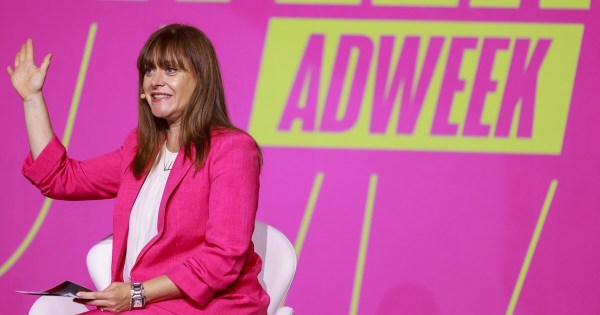
During Brandweek 2026, TikTok co-hosted a three-day series called “Agencies Doing Cool Sh*t,” in which Emily Freed, general manager of U.S. agency at TikTok, sat down with two agency leaders to discuss new strategies for social media and creators.
The first day featured Leslie Ann Hall, founder and CEO of Iced Media, an agency that specializes in the beauty industry.
Hall talked about Iced Media’s client Rael, a Korean holistic cycle care brand, that was launching a microneedling serum. She laid out two main challenges: beauty on TikTok is very competitive and the scientific product needed to be simplified for social media.
The agency’s solution was to team up with “mega creator” Mikayla Nogueira. Leveraging Nogueira’s reputation led other creators to talk about Rael, which turned TikTok into a “demand engine.”
“It’s about these connected systems where you’re combining performance media, social commerce, and then thinking about generative engine optimization, when you’re working with a creator like this,” Hall said. “The best thing that we did was look at TikTok as a way to drive awareness to fuel omnichannel growth instead of as a single channel.”
Hall returned for the second day of the series to talk about how marketers must find ways to get their products recommended by AI platforms, using Iced Media’s client, Moroccanoil, as a real-world example.
Hall hit on the fact that the “purchase journey is not linear,” explaining that a consumer may discover a product via social media and then go to an AI platform for more information, or vice versa.
“The most important thing that brands can do is make sure they have enough content that will reach the consumer at all stages of those journeys,” Hall explained. She added that TikTok and TikTok Shop are becoming top sources for large language models.
Freed agreed, adding that consumers are trending toward AI recommendations that are “validated by real people.”
“That combination of how you make sure that your data is structured in a way that is machine-discoverable and then how you make sure that you have content that is ready for human validation is really super important,” Freed said.
On the third and final day of the series at Brandweek, Freed introduced Alex Yang, co-founder and president of Boost Engine, to talk about the importance of creators.
Yang shared how Bissell, a Boost Engine client, allowed creators to “explore their creativity” and move beyond the traditional “before and after-type” of content that’s become cliché in a crowded home-cleaning category.
“For creators, if you really want to activate them and drive growth, having this mindset of exploring content in different formats and finding the winning format for your brand, for your audience profile will be crucial to success,” Yang said.
Yang also believes in the power of content that is scalable. This means working with many creators at once—Yang cited thousands—and building what he called an “army of your affiliates.”
“To build that repeatable system, it’s very important that you are open to working with creators first, treating them with respect, and … giving them the right tools they need. Inform them about, for example, your paid media strategy behind [a product], your assortment strategy, and a winning type of content format,” Yang added.
Justin Chin is a contributing writer for ADWEEK.
By submitting your email, you agree to our Terms of Use and Privacy Policy . You may opt-out anytime by clicking ‘unsubscribe’ from the newsletter or from your account.
Select ADWEEK as one of your favorite sources and stay up to date on our latest content.
A leader in Target’s ad business warned marketers they’re prioritizing the wrong measurement
Why value, rewards, and loyalty matter in a season of tradeoffs
A Social Commerce Playbook for the AI Era – ADWEEK
Related Posts
 out 18, 2026
out 18, 2026
out 18, 2026
 out 18, 2026