
By Anthony VargasFor years, ad budgets have been shifting from the open web and independent publishers to walled garden platforms like Meta.But, recently, that shift has begun to reverse a bit.Nearly two-thirds – 63.9% – of advertisers have moved mobile budgets from walled gardens to independent partners in the past year, according to a July survey of 166 brands and agencies by eMarketer and Datum Intelligence. Only 1.2% of the survey respondents shifted their budgets the opposite way.That being said, eMarketer projects Meta, Google and Amazon will attract 62.3% of worldwide digital ad spend this year, with Meta topping Google in ad revenue for the first time.Still, publishers around the world, including Norwegian-based news and broadcasting conglomerate Schibsted Media Group, are trying to take advantage of any shift away from Meta and the other walled gardens they can get. Schibsted is working with Nodals AI, a London-based company that creates custom ad optimization algorithms for publishers in Europe and the US, to help court brands who’ve been wooed by Meta’s own optimization tools, Christer Ljones, director of ad data capabilities at Schibsted Marketing Services, told AdExchanger.Schibsted owns VG, the largest digital news publisher in Norway, boasting about 2.4 million daily visitors. It also owns Aftonbladet, one of the largest digital news publishers in Sweden, which claims 3.6 million daily visitors. And it acquired Sweden’s TV4 and Finland’s MTV Oy – two of the largest TV broadcasters in those countries – from Swedish telecommunications group Telia last year.These properties, combined with the rest of Schibsted’s local newspaper network, give the company roughly 50% audience reach in the geos it covers, Ljones said.To put Schibsted’s audience size in perspective compared to US publishers, its largest properties, VG and Aftonbladet, have wider reach than the Los Angeles Times, which attracts a combined weekly online and print audience of 4.4 million, or about 11% of California’s population.VG and Aftonbladet make most of their money from advertising, with the local publications more reliant on subscriptions, Ljones said. Online display ads and branded content account for most of the company’s ad revenue, with a roughly even split between the two.Like other large publishers with strong reach concentrated in specific markets, Schibsted has long pitched advertisers on working with the company directly to take advantage of its market saturation and its deep knowledge of its audiences, he said. The direct ad business comprises roughly two thirds of Schibsted’s ad revenue, with programmatic making up the remaining third.But audience reach isn’t the only thing that matters to performance-minded brands. The walled gardens have won advertisers over with AI-powered campaign optimization features like Meta’s Advantage+, Ljones said, and it’s been hard for open-web publishers to keep up on the ad tech side.It’s also been harder for open web publishers to compete when it comes to direct sales, said Nodals Founder and CEO Aly Nurmohamed.“Advertisers have been trained by Meta to just care about ‘I put money in and I see how much money comes out,’” Nurmohamed said. “So the problem for Schibsted was advertisers were saying, ‘I don’t want to buy on a CPM, and you’re really expensive relative to Meta. Here’s what I’m doing with Meta. Can you replicate it?’”Schibsted has always seen Meta as a competitor and not a “partner,” Ljones said. While some publishers experienced short-term gains from working with Meta in the past, he added, the platform is no longer shy about cutting publishers out of its ad business.That dynamic is part of the reason Schibsted has been leading the charge against Meta’s planned terms of service update. The update would have required all publishers active on Meta platforms to share data for training the company’s AI models – essentially, training the optimization tools that are helping Meta take publishers’ portion of ad revenue.Schibsted, along with 180 other publishers, joined the Norwegian Media Businesses’ Association in suing Meta over its TOS update at the end of October. Within two days of the lawsuit being filed, the Oslo District Court ruled in the publishers’ favor, imposing a freeze on Meta’s TOS update in Norway until its legality could be investigated. Legal decisions like this one likely prompted Meta to pause its TOS update across all regions earlier this month.But legal battles are just one way Schibsted is fighting against Meta’s market dominance. Custom algorithms, like those Nodals creates, are another weapon in its arsenal.Schibsted sees these custom algorithms as a way to remind advertisers of its effectiveness in driving performance and brand awareness by using similar tools to those offered by Meta, Ljones said.Nodals pitches itself as a solution for publishers to create their own Meta-esque optimization engines.And Schibsted could be in a strong position to win back some of the business it’s lost to Meta. It’s maintained a direct relationship with its audience through its owned and operated properties, even as other publishers struggle with AI search stealing their traffic, according to Ljones. As a result, it’s only reliant on search for a single-digit percentage of the traffic on its largest sites.That direct relationship with its audiences gives Schibsted the first-party data insights it needs to compete with Meta’s campaign optimization capabilities, Nurmohamed said.“We take their data and feed it into their own models, collecting everything they know about what their audiences are, any logged-in data they have, how far you scroll down the page, how often you click on content or ads,” he said. “All of that goes into our model, and then you can have a powerful prediction on who is likely to click and buy on a particular advertiser.”Plus, because the publisher owns the optimization algorithm and the data that powers it, Nodals’ solutions shouldn’t be affected by Apple’s recent efforts to crack down on third-party audience data vendors and ID graphs, Nurmohamed said.Schibsted first tested Nodal’s tech last summer and has been incorporating it into its direct sales efforts since those successful tests, Ljones said. It’s been building a new product line of direct-sold native ad formats with AI optimization built in, priced on a cost-per-click basis, rather than on a CPM model.The new products are resonating with some of Schibsted’s advertisers who are looking for a mix of performance and brand awareness from their ad campaigns, he said. And, while Schibsted “won’t be necessarily as good as Meta on average” when it comes to driving performance, “you don’t need to beat them on the average. You just need to beat them with meaningful scale at the margin.”For example, Schibsted has found success pitching advertisers that have been pouring more money into Meta lately but seeing diminishing returns, Ljones said.“We get feedback from advertisers that they’ve seen their Meta ROI, their conversions, flatten out, or maybe even decline slightly,” he said. “So, the overall idea that we see initially working is, ‘Let’s take 10% of whatever you spend on Meta, and you can probably keep most of your conversions and get more [from us].”Ljones feels confident that Schibsted can build on those margins going forward.“We’re in an early phase, but we’re seeing the right results,” he said. “For us, that’s taking new budgets from existing clients, defending existing budgets in a few cases, but also addressing clients we basically lost.”Update 11/12/26: This article was updated to clarify the type of advertisers Schibsted said are interested in its custom algorithms.For the first time, a new feature in Google Ads breaks down the dollar amount a campaign saved from IVT blocking and exactly how much Google is crediting the campaign for bots caught post-billing.Tim and Chris Vanderhook explain why Viant bought Waymark and how it fits into their ambitious plans for CTV.AI is taking over the media and tech industries in the name of simplification, and marketers are pining for provable campaign outcomes, including from TV. These shifts are also causing significant change in Agency Holdco Land, according to Angela Steele, the first chief client officer for WPP Media US.No major retail media player has taken as circumspect an approach to ad revenue as Shopify. But the company has recently taken its next important step with a product called Campaign Autopilot.OpenAI’s head of monetization, Benji Shomair makes the case for ads as a way to bring ChatGPT to more people, with user trust taking priority over advertiser demands.In Q3, The Trade Desk beat the admittedly pessimistic revenue forecast it set for itself earlier this year. But growth has stalled.Join the AdExchanger CommunityAdExchanger is where marketers, agencies, publishers and tech companies go for the latest information on the trends that are transforming digital media and marketing, from data, privacy, identity and AI to commerce, CTV, measurement and mobile.CTV WorldMarch 30-31, 2027Register & Lock in Today’s Pricing© 2026 Access Intelligence, LLC – All Rights Reservedsource
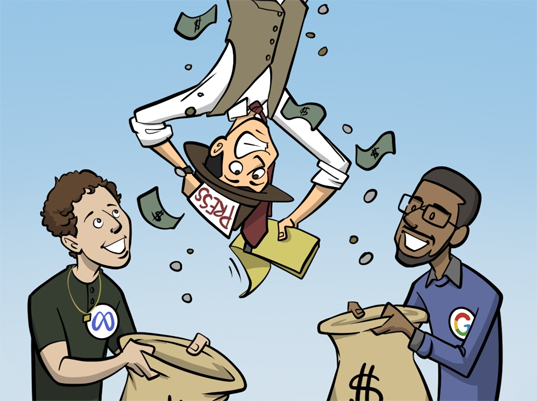
Custom Ad Algorithms Are Helping Schibsted Media Win Budgets Back From Meta – AdExchanger
Related Posts
 nov 12, 2026
 nov 12, 2026
 nov 12, 2026