
Automotive
Fiat’s decision to launch in Brazil the project known internationally as Grande Panda with the name New Argo generated strong repercussions on social media, as shown by the portal iG Carros when covering the audience’s reactions.
Since the confirmation of the choice, users, brand enthusiasts, and industry journalists began commenting on the strategy, with criticism concentrated mainly on the naming of the model.
The reaction gained momentum because part of the audience associated the launch with a possible retrieval of historic names from the national industry.
Grok evolves from a mere chatbot in Tesla cars, now controlling physical functions and preparing a new feature to send messages using natural language
Scania’s New Electric Truck Achieves 720 km Range and Introduces Megawatt Charging to Minimize Downtime
Affordable Citroën C3 Live Pack 1.6 Automatic 2024 Now Priced Under R$ 70,000 with 120 hp and 6-Speed Transmission
Toyota Project 150D 2027: Corolla Cross Platform, 2.5 Hybrid Engine, and Mid-Size Pickup to Compete with Toro, Maverick, and Ram Rampage in Brazil
The Uno, which marked different generations and recorded high sales volumes throughout its trajectory, ceased production and came to occupy a symbolic space in the automaker’s portfolio.
In this scenario, the expectation surrounding the return of the name frequently appeared in online discussions.
On X, formerly Twitter, and other digital platforms, the comments follow a similar line.
Users question the choice and claim that the car would have greater appeal if it adopted the name Uno or even Panda, a designation used in other markets.
The messages mostly present this argument as personal evaluations on brand positioning.
Experts in automotive marketing consulted by industry outlets often point out that established names function as shortcuts to recognition among consumers.
Within this logic, part of the audience interprets Fiat’s decision as an option to preserve the identity of the already existing Argo, even if it implies giving up a name historically associated with the brand in Brazil.
The criticisms, therefore, are not limited to affectionate memories.
There are also questions about the coherence between the chosen name and the product’s proposal.
For some consumers, using the name Argo in a project with distinct characteristics could create confusion about the positioning of each model within the manufacturer’s lineup.
Another element that helps explain the repercussion is the path taken by the project before its official presentation in Brazil.
Since the first images and information disclosed abroad, the model began to be informally treated as a possible successor to the Uno by the specialized press and the public.
This movement raised the expectation surrounding the name.
When Fiat confirmed that the car would be called New Argo, the difference between what part of consumers expected and what was announced became evident on social networks.
The reaction, in this case, reflects more the contrast between expectation and decision than a technical evaluation of the vehicle.
The Grande Panda is part of a new global family of compact cars from Fiat aimed at emerging markets.
In Brazil, the model will be positioned as a entry-level car for the brand, below SUVs, occupying a space traditionally associated with compact hatchbacks.
The proposal includes dimensions and solutions designed for urban use, focusing on interior space and practicality.
According to information already released by the automaker, the base used is an evolution of known platforms from the Stellantis group, which should allow for space adjustments and configurations suitable for the local market.
Industry analysts emphasize that, in this segment, attributes such as price, consumption, and maintenance usually weigh more in the purchase decision than the name itself.
Still, the repercussion indicates that identity and communication remain relevant factors in how a launch is received.
For the Brazilian market, the expectation is that the model will use engines already present in Stellantis’ portfolio, prioritizing energy efficiency and low operating costs.
Among the most cited options are the 1.0 aspirated engine and the 1.0 turbo flex, both widely known to consumers.
There are also references, in industry analyses, to the possibility of versions with some level of light electrification in the medium term, aligned with the group’s strategy to expand the offering of accessible hybrid solutions.
So far, however, there is no detailed confirmation regarding deadlines or specific configurations for Brazil.
The manufacturing of the model in Brazil, in Betim, is part of the plan to achieve high sales volume.
The strategy contemplates both the end consumer and the corporate market, including fleets and rental companies, which have a significant share in this segment.
Local production is usually associated with greater price competitiveness and adaptation to Brazilian consumer preferences.
Even so, the discussion on social media shows that a portion of consumers evaluates the launch also from a symbolic perspective, relating the chosen name to the brand’s history in the country.
While the New Argo has yet to reach dealerships, the debate remains concentrated in the digital environment.
Content writer and analyst. She writes for the Click Petróleo e Gás (CPG) website since 2024 and specializes in creating content on diverse topics such as economics, employment, and the armed forces.
There are no comments to display here
Siga o CPG nas redes sociais
© 2026 Click Petróleo e Gás – All rights reserved
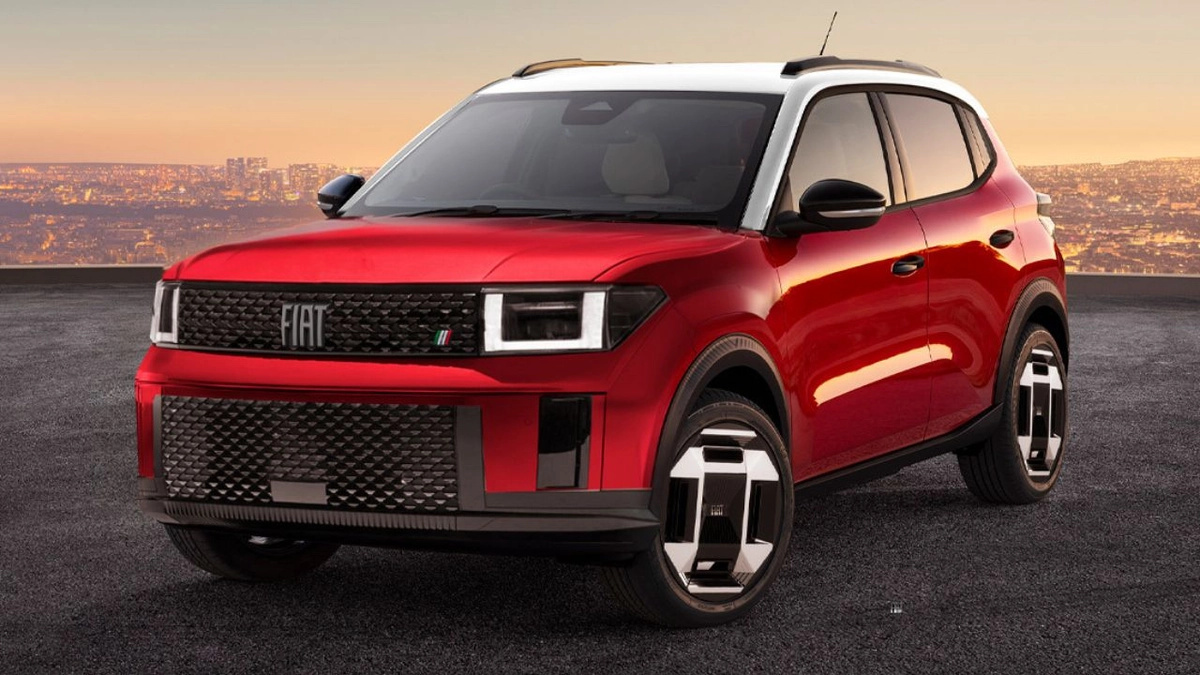
Fiat Disappoints Fans By Naming The New Grande Panda As Novo Argo, Ignoring The Uno Legacy And Generating A Wave Of Criticism On Social Media – CPG Click Oil and Gas
Related Posts
 out 12, 2026
out 12, 2026
out 12, 2026
out 12, 2026
out 12, 2026