
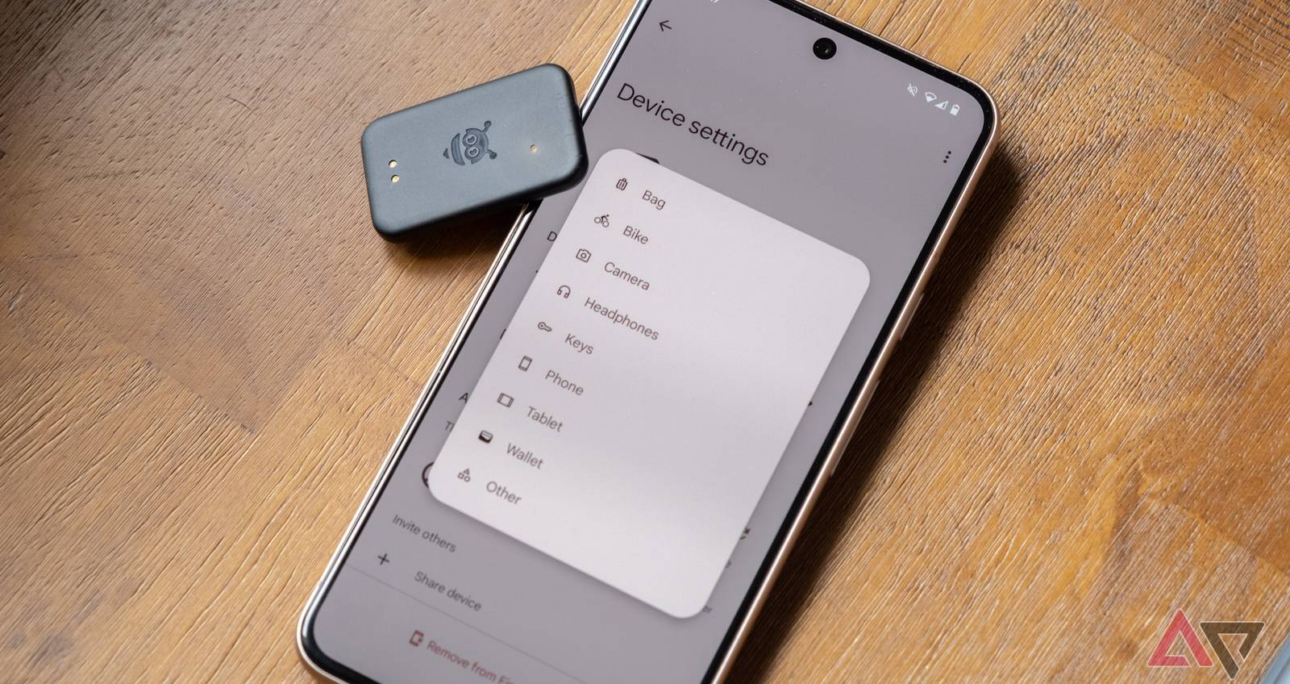
Google's much-anticipated Find My Device network for offline phone tracking and support for tracking tags went official in April 2024. The network's initial rollout was extremely slow and limited to the US and Canada, with Google expanding it internationally in May this year. Since the network's debut, Find My Device-supported item trackers like the Pebblebee Tag have also gone on sale, but as we noted in our review, Google's crowdsourced tracking network doesn't always work. The good news is that Google is aware of these issues and is working on improving its reliability.We once expected it, but now it might not be on the cardsIn a statement shared with Android guru Mishaal Rahman, Google notes that it will soon enhance the Find My Device network to improve its speed and ability to track lost items. These changes will roll out "over the coming weeks."Additionally, the network's reliability will improve as more and more devices join it. Given the slow expansion of the Find My Device network, this could take a few more weeks or months. However, once the rollout is complete, the expanded network coverage should make finding your lost phone or tagged item easy.Below is Google's full statement:"We are actively working to roll out enhancements to how the Find My Device network operates that will improve the speed and ability of locating lost items over the coming weeks. Devices are continuing to join the new Find My Device network, and we expect the network to grow, which will also help improve lost device findability. We encourage Bluetooth tag owners to change their Find My Device network setting to 'With network in all areas' to help improve the network's ability to find their lost items in lower-traffic areas."Google also encourages item tracker owners to change the Find My Device network setting on Android phones to "With network in all areas." This should help them find their tagged item even in low-traffic areas.By default, the option is "With network in high-traffic areas only," which helps track your lost or tagged device using stored recent locations or the network in busy areas like footpaths or airports. In the latter, the network will only show the location data when multiple Android devices have detected the lost or tagged item. It then aggregates all the data and shows the location based on it. It's good to see Google's commitment to its Find My Device network and its work on addressing its teething troubles. As the network gains more popularity, its reliability should also improve further.We want to hear from you. Share your perspective in the comments below, and please keep the conversation respectful.Your comment has not been savedWhy not make that setting the default?All of this effort to build a great solution, only to appear like a sloppy, barely functional alternative to Apple’s.Sometimes it seems like Google just WANTS to be considered the inferior choice.it is truly mystifying. hamstringing one of its few chances to hit the ground running.and now that it’s been rolled out with the slightly more “secure” but poor, multi-device requirement, if they DO change the default to the “in all areas” setting (which is how Apple already does it), there’ll be a a target on google’s back and people will complain about privacy issues. so it’s borderline too late for google to even make the appropriate fix.amazing.Apple is facing a class action lawsuit for privacy issues. Google is trying to avoid that. Did Google go too far with its network? Apparently, because it sure doesn’t work in low-traffic areas. I’ve been testing it with Pebblebee Clip trackers. I’ve had pretty good luck in busy areas, but no luck when I park my car on the street in a residential area. So now they need to loosen the constraints a bit. I’m not sure if that would mean requiring fewer phones in the aggregation, or perhaps broadening the time period for the detections in the aggregation. For example, is the current requirement that, say, 5 phones have to detect a tracker all within 10 seconds of each other? If it works that way — and I don’t know if it does — then change it to 3 phones over 2 minutes, or whatever.Another idea is for Google and Apple to let you define “safe spaces”, like your home, where phones won’t report the location of a tracker to the network. I’m sure there are other ways to improve privacy without crippling the network.Thats the Google way, settings within settings under a different position………….The best of Android Police, directly in your inbox.By subscribing, you agree to receive newsletter and marketing emails, and accept our Terms of Use and Privacy Policy. You can unsubscribe anytime.source
Google working to make Find My Device network more reliable for tracking lost items – Android Police
Related Posts
 nov 3, 2026
 nov 3, 2026
 nov 3, 2026