
Trending Today 🔥 Our gifting experts are obsessively searching for holiday gifts that are unique, thoughtful and suitable for any budget. Our expert, award-winning staff selects the products we cover and rigorously researches and tests our top picks. If you buy through our links, we may earn a commission. Tech > Services & Software > AIWith Google now injecting "sponsored" links directly into AI follow-up queries, traffic to online publishers will suffer even more.Senior EditorOctober 29, 2026, 8:43 pm ETIf you happened to listen to Alphabet’s quarterly earnings call on Wednesday, you might have heard that searches are up, but ad revenue is down. According to Google Chief Business Officer Philipp Schindler, search ad revenue growth slowed in the third quarter of 2026 because user queries are migrating to AI Overviews and AI Mode, which suffer from “lower monetization.”You actually know how this works. When you type a question into Google, a summarized AI response often appears immediately, reducing the classic ad-clicking behavior further down on the page, which generates Google’s core revenue.Now, the tech giant is expanding how and where we see ads when using AI Mode during searches. Google is scaling ads in AI Mode to 10 new countries (including Australia, Canada, India, Kenya and Singapore), with plans to launch in Brazil, Mexico and the UK later this year. More from CNETIn the US, Google is launching what it calls “multiturn ads,” allowing ads to appear directly within follow-up queries in AI Mode when a search or conversation has “commercial relevance.” Take, for example, if you start a search with “How does a smart fridge work,” and follow up with “What are the best-selling smart fridges?” You could then see refrigerator ads in sections labeled “sponsored.”Google said that “multiturn ads” can better target what a user wants in a product because AI Mode gathers more information during a back-and-forth conversation. Ads can also appear on initial AI Mode queries, not just after follow-up questions, and sometimes ads won’t appear at all if there doesn’t appear to be purchase intent, according to Google.But as Google relies more on AI Mode and AI Overview, there’ll be less reason to click on content links “below the fold,” meaning content that sits out of view until a reader scrolls down a web page. Lily Ray, a well-known SEO expert and founder of Algorythmic, told CNET that it’s going to become harder to use Google to find articles from preferred publishers and articles you want to read directly from a website. “You’ll have to dig deeper and look outside of Google’s products,” Ray said via email. According to Ray, Google’s AI tools aren’t designed to give you the exact link you’re looking for. Still, you don’t have to rely on AI Mode or AI Overviews to get search results. You can also scroll down to the search results the old-fashioned way or use a web filter to use Google as a list of links. She also recommends setting up your favorite publications as “preferred sources” (instructions here) so you can see more of those pages cited in your personalized results.“Unless you’re satisfied with AI answers directly on Google, you’re going to need to start evolving your own search behavior to find the websites you’re looking for,” Ray said. Google is still the largest search engine in the world, accounting for nearly 90% of the global search engine market. In fact, the company said its year-over-year query volume growth in the third quarter was the fastest over the past five years.But beginning with the launch of AI Overviews in May 2024, Google’s reliance on AI has slowed advertising. The impact has been even more devastating for online publishers — ranging from major newspapers and digital media sites to brands and trade associations — driving an unprecedented decline in website traffic. AI Overviews now appear on nearly half of Google search queries, with a corresponding 61% drop in raw traffic volume to other pages. Google is effectively scraping publisher information, summarizing it and satisfying the user before they leave the search results page. That’s why it’s often referred to as the “zero-click” crisis.“AI Mode and AI Overviews answer questions directly in Google’s interface, so there’s less reason for people to click on publishers,” Ray said. AI Overviews are summary boxes at the top of a traditional search results page, while AI Mode is a conversational interface designed for ongoing dialogue and research. You can access AI Mode directly by selecting the AI Mode button at the far right of the search bar on the Google home page, or by selecting AI Mode in the horizontal menu near the top of other Google pages.When you use AI Mode, you won’t get an AI Overview or a long list of links to other websites offering more information. Instead, AI Mode provides “more advanced reasoning and ways of interacting” with a conversational approach. For instance, if I use AI Mode and ask, “Where can I see the northern lights?” I get a map and a list of various locations with pros and cons for each. In regular search mode, I get an AI Overview at the top and, below that, pages of links to websites related to my query.Ray said that with more ads, there’s going to be an even greater decline in organic click-through rates — in publishing speak, that’s the percentage of people who actually click on a natural, nonpaid search engine result, out of the total number of people who simply saw the headline on the page. Not only will the AI text answer your question, but Google will now aggressively route you toward advertisers rather than publisher links.“Like many things in Google Search, it means that if you’re not participating in Google Ads, it’s going to be harder and harder to get that traffic organically,” said Ray. © 2026 CNET, a Ziff Davis company. All rights reserved. source
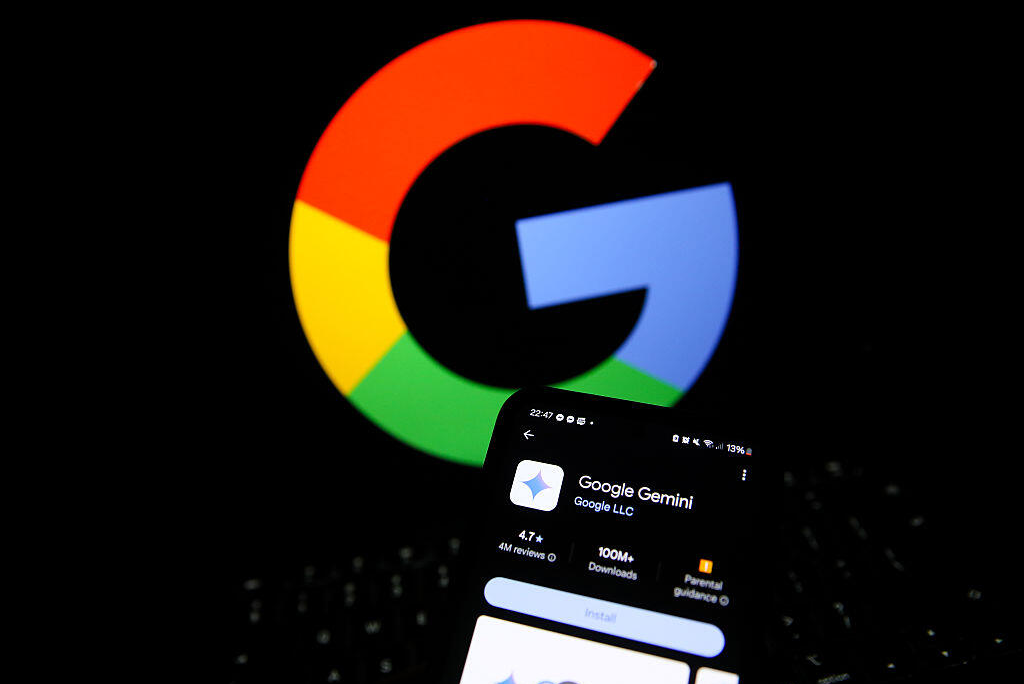
Here’s Why You’re About to See More Ads in Google’s AI Overviews – CNET
Related Posts
 out 30, 2026
 out 30, 2026
 out 30, 2026