
Newsroom Quality worth making room for Prefer Newsroom on GoogleLabour is pumping money into social media ads on Meta, while National is hoping the viral content approach it took in 2023 will pay off once again. National’s more aggressive, informal approach isn’t correlating with the same jump in the polling data the party enjoyed last election, and its opponents think voters are not enticed by AI-generated content or attack ads. Labour isn’t relying on memes, instead funnelling a record amount of money into a last-minute push on Meta’s platforms.According to Meta’s data, Labour is focusing its social media ads on accounts associated with renting and buying a first home, parenting, renewable energy, music festivals and renewable energy. National is targeting accounts associated with golf, cricket, family, investing and yoga.National spent nearly $320,000 with social media agency Topham Guerin during the 2023 campaign, pushing out a social media barrage dominated by TikTok trends and memes. The agency credits the campaign with reaching 17 million views without spending a single dollar on paid ads. That year, on Meta platforms Instagram and Facebook, National spent $215,000 on paid ads in the 90 days leading up to the election, behind Labour on $250,000 and the top spender, Act, on $335,000. This data is available via Meta’s Ad Library.The recent spending of all three coalition parties is outstripped by Labour, which has spent $276,070 in the past 30 days alone: roughly equal to Act, New Zealand First and National’s combined 90-day totals. Over the 90-day timeframe, Labour has spent $302,181, meaning a full 90 percent of its spending has occurred in October. Labour did not want to discuss its campaign strategy with such little time remaining, and in such a tight race, but issued a statement saying it wanted to “reach as many voters as possible”. Mona Krewel – the director of Victoria University Wellington’s internet, social media, and politics research lab – is familiar with these data sets. The public-facing Ad Library does not offer the granularity and “microtargetting data” of Meta’s Ad Targeting Dataset, but Krewel says this information is not available to the public and requires months of analysis to understand. Want to stay across stories like this? Start your day with Newsroom’s top stories and analysis in your inbox.In the meantime, she says the public data is a “useful first glimpse” into a party’s strategy, which is what Newsroom has used.According to the Ad Library, this year, National has spent $121,000 promoting content on Meta in the past 90 days, and has not ramped up spending as the election draws closer. Instead of paid ads, National’s Facebook account is posting non-promoted material, with a hint of the last campaign’s focus on virality and memes, often attacking opposition members or policies.Labour is doing this as well, albeit not as much as National. Recent posts on its page ask users to pick their favourite “Luxon Out of Touch Moment (of all time)”, and a Luxon Halloween costume set complete with “scissors to cut jobs and services”.Where Labour and National clearly separate is on the use of AI. National has used it to generate photos and videos of its opponents, after months of changing stances on what is or isn’t an appropriate use of the technology. A recent National post, in the style of South Park animation, shows opposition leaders freeing criminals from jail, breaking into homes and stealing the hard-earned savings of unsuspecting Kiwis. Greens co-leader Chlöe Swarbrick describes it as “slop”.Swarbrick is a recent focus of National’s campaign, which is warning voters that she will replace Nicola Willis as finance minister in a Labour-led government – something Labour has ruled out. National’s campaign chair Simeon Brown fielded questions last week on the possibility of Willis instead being replaced by Act Party leader David Seymour, a position he has expressed interest in; Labour ran this interest as a warning to voters on its own social channels, but not to the degree National focused on the prospect of finance minister Swarbrick.Of the 17 posts National put on Facebook in the 24 hours leading to October 30, 11 featured Swarbrick by name or image – more than Hipkins, more than Willis, and more than its own leader and face of the party, Christopher Luxon.Swarbrick says “it seems the only person who gets to live rent-free in Luxon’s New Zealand is me, in his head”. She says National’s campaign has been full of personal attacks, and doesn’t think it’s going to win voters. “If they want to step out from behind the AI slop and nastiness, our invitation to a proper debate between myself and Willis stands,” she says.The Greens have spent $94,111 on Meta ads in the past 90 days, with its most viewed ad pushed exclusively towards women on Instagram. It is interested in accounts associated with conservation, politics, social movements and study. One fifth of its ad spend went towards targeting women, the same proportion National used to target men. The other parties did not demonstrate any strong gender variance. Act, which spent the most in 2023, has only spent $138,105 in the past 90 days. Its most popular ad is a plea from Paul Henry to create an overhang by splitting the party and electorate votes between Act and National. Act isn’t selectively targeting its ads to a certain demographic or a shared interest; instead, they’re using a custom “exclusion” list to avoid showing content to certain users, but Meta does not make these details public. It is the only party with a social media account manager listed in the United Kingdom – two, in fact – while National and New Zealand First are the only parties with a manager listed in India.The third leg of the coalition, New Zealand First, has spent just $61,342 in the same 90-day timeframe. Its ads are mostly even across ages and genders, leaning slightly older. It is spending the most money on ads directed at accounts in charge of local community pages and associated with family-centric content.New Zealand First is also using location targeting to push ads towards two small towns outside of Christchurch: Darfield and Duvauchelle, the latter a town of 210 people near Akaroa with a median age 18 years above the national norm.Opportunity has not targeted a specific age or gender, is not targeting accounts associated with a specific interest, and has spent the least on Meta’s advertising of any party.Newsroom exists because of readers like you. Help us deliver trusted, independent journalism that serves all New Zealanders. Support our work with a donation today. Fox Meyer is a political reporter based in Wellington. More by Fox Meyer Only Members may post a comment. If you already have a membership, then sign in. Subscribe now.Start your day with a curation of our top stories in your inboxStart your day with a curation of our top stories in your inbox.This site is protected by reCAPTCHA and the Google Privacy Policy and Terms of Service apply. Enter the code sent to your email Email address Enter your password Sign in by entering the code we sent to , or clicking the magic link in the email. I agree to Newsroom’s Terms and Conditions. This site is protected by reCAPTCHA and the Google Privacy Policy and Terms of Service apply. We'll send a verification code to %EMAIL%. Link Copy link source
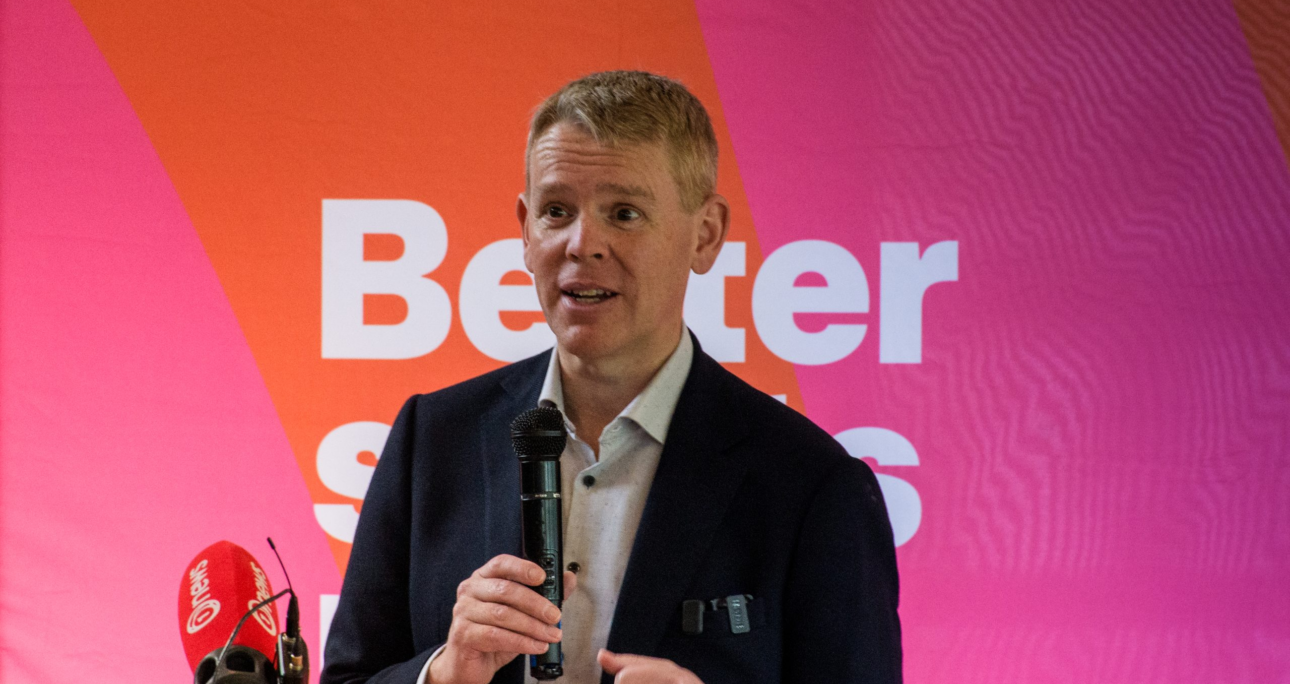
Labour outspends entire coalition Government on Facebook ads – Newsroom
Related Posts
 nov 1, 2026
 nov 1, 2026