
Numbers, Facts and Trends Shaping Your WorldRead our research on:Full Topic ListRead Our Research On:|The U.S. data center boom is emerging as a key issue in political advertising on social media in the home stretch of the midterm campaign season, a Pew Research Center analysis finds.Spending on political ads mentioning data centers has increased exponentially in the run-up to the 2026 U.S. midterm elections. Over a period of 90 days from Jul. 27 to Oct. 24, advertisers on Facebook and Instagram spent almost $12 million on ads that mention data centers in the context of social issues, elections or politics. (In this analysis, we refer to these ads as “political ads.”) As recently as January, pro-data center sentiment was slightly more common in this advertising than anti-data center sentiment. Among political ads mentioning data centers, 42% were supportive of them while 31% were critical. The remainder did not take a clear stance.But since the beginning of this year, ads that mention data centers have grown increasingly critical. So far in October, 57% of these ads have expressed opposition to data centers, while just 3% have been clearly in favor of them.This finding comes as Americans’ views of data centers have grown more negative in recent months.This Pew Research Center analysis looks at U.S. political ads on Facebook and Instagram that discuss data centers.Pew Research Center does research to help the public, media and decision-makers understand important topics. This research builds on our recent work about data centers and artificial intelligence.Learn more about Pew Research Center and our work on artificial intelligence.Facebook and Instagram advertising data comes from the Meta Ad Library API. The Ad Library is maintained by Meta and includes every advertisement about politics, elections or social issues appearing on Meta platforms worldwide. For simplicity, we use “political ads” throughout this post to refer to these ads.For this analysis, we identified every ad in the Ad Library that mentioned data centers in its text or audio and ran on Facebook or Instagram in the United States from Jan. 1 to Oct. 24, 2026. Most of the ads we identified (87%) ran on both platforms.For each ad, we collected its text, the states in which it ran and how much was spent to run it. Meta provides ad spending data as a range, so we used the midpoint of each ad spend range when calculating total spending. We then used GPT-5.6 Luna to determine if each ad:Across all of these categories, the model achieved an average F1 score of 0.88 and 95% accuracy on a validation dataset of 300 ads coded by trained human coders. See the full model prompt we used to classify these ads. We also used several other data sources to complement this analysis. These include historical data on total political ad spending from the Meta Ad Library Report as of Oct. 24; the number of competitive House, Senate and gubernatorial races in each state, according to the Cook Political Report on Oct. 24; and the number of current and planned data centers in each state based on Data Center Map estimates on Oct. 27.Some common themes emerge in political ads on Facebook and Instagram that mention data centers:Certain themes are more common in ads that are critical of data centers than in ads that support them. For example, nearly half of ads that oppose data centers discuss the corporate interests behind them, like the tech industry or utility companies. That is roughly double the share of pro-data center ads that mention these interests. Meanwhile, ads that support data centers disproportionately discuss their impact on jobs.A majority (61%) of recent spending on Facebook and Instagram political ads about data centers has been on ads that don’t promote specific candidates for office. These ads are typically paid for by advocacy groups. More than half of these ads (56%) express opposition to data centers, but 13% are supportive – a much larger share than among campaign ads.The remaining 39% of recent spending has been for ads that support specific candidates. Of the campaign ads in our analysis period, 72% promote Democratic candidates and 15% promote Republican candidates, while the remainder are for independent candidates or those whose party affiliation could not be determined. A majority of these campaign ads are critical of data centers, and this holds true across party lines. Pro-data center ads are rare for both parties, occurring in less than 1% of campaign ads overall.In other words, Democratic candidates are more likely than Republicans to post political ads about data centers. But when they do talk about data centers, Democratic and Republican candidates are similarly critical of them.Since late July, advertisers spent more than $1 million on political ads mentioning data centers that targeted Facebook and Instagram users in each of three states – Ohio, Wisconsin and Texas. Data center ads made up about 14% of all the political ad spending on these platforms that was aimed at users in Wisconsin, the highest share of any state.In general, states with more competitive elections for the U.S. House of Representatives, Senate or governor have seen more spending on Facebook and Instagram political ads about data centers. Spending on these ads is also higher, on average, in states with more operational or planned data centers.TopicsAnna Lieb is a computational social science analyst at Pew Research Center.901 E St. NW, Suite 300Washington, DC 20004USA(+1) 202-419-4300ABOUT PEW RESEARCH CENTER Pew Research Center is a nonpartisan, nonadvocacy fact tank that informs the public about the issues, attitudes and trends shaping the world. It does not take policy positions. The Center conducts public opinion polling, demographic research, computational social science research and other data-driven research. Pew Research Center is a subsidiary of The Pew Charitable Trusts, its primary funder.© 2026 Pew Research CenterWe use cookies and other technologies to help improve your experience; some are necessary for the site to work, and some are optional. Learn more in our privacy policy.These cookies are required for the website to function and cannot be switched off.These cookies are used to collect information about how you use our website.These cookies are used to track your activity and show you personalized content.These cookies allow the website to remember choices you make.source
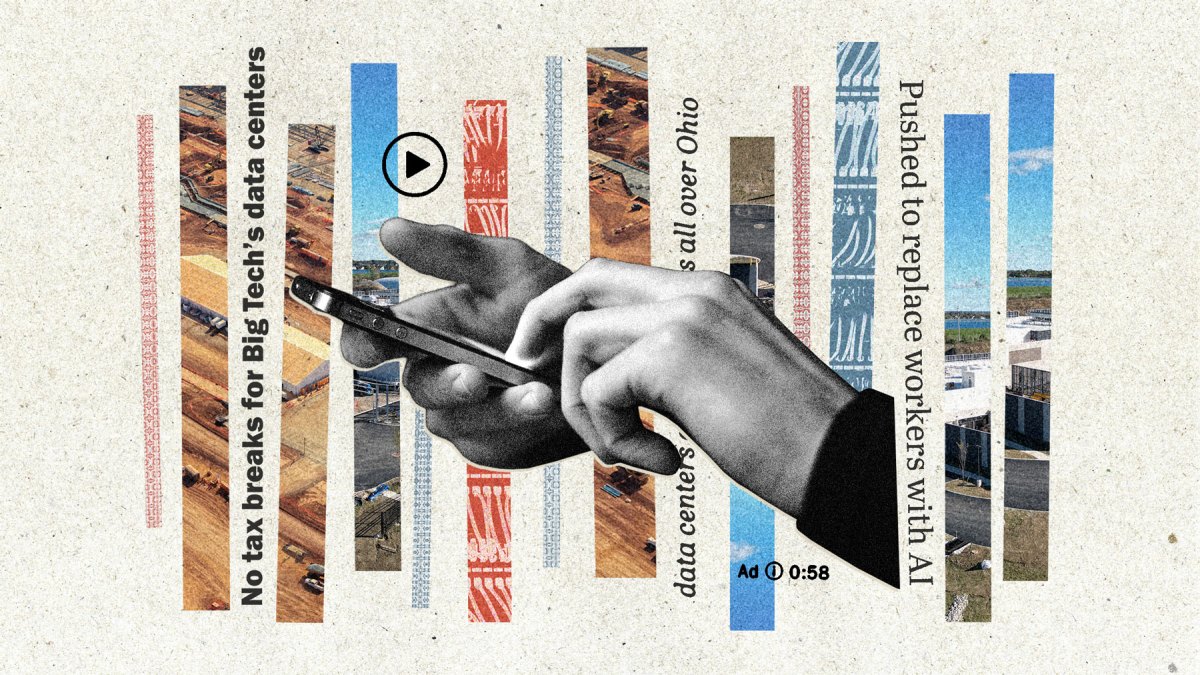
On Facebook and Instagram, Political Ads Are Increasingly Critical of Data Centers – Pew Research Center
Related Posts
 out 29, 2026
out 29, 2026