
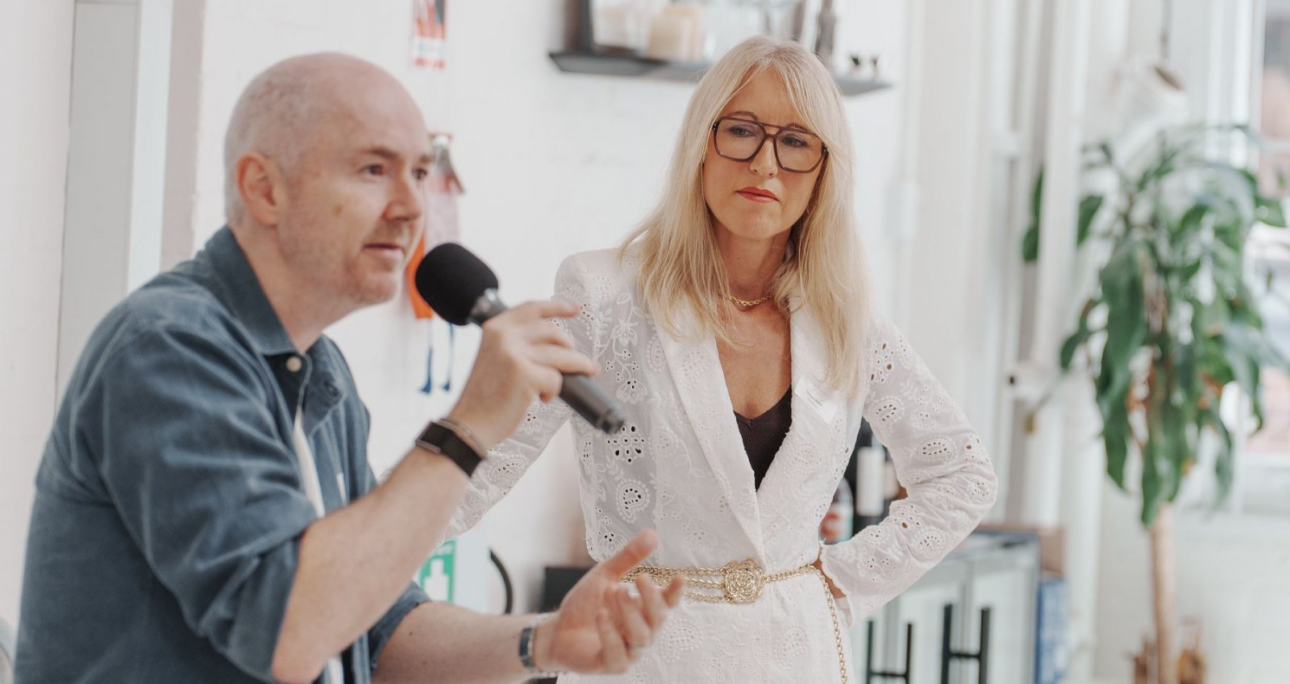
Only 4% of grocery buyers credit paid ads for their last new-product trial. Another person? That earns the nod from 27%.Somewhere in Australia, a new flavour of corn chip is launching with a TV spot, a programmatic buy, and a rack of shelf wobblers. Somewhere else, a parent at the school gate is telling roughly 15 people the chips are actually quite good.New research from Social Soup says only one of them is doing the heavy lifting.Recommendations from friends, family, creators, and reviews drive more than six times as many new product trials as all paid advertising combined, according to the community-first influence agency. Among main grocery buyers who had recently tried a new product, 27% said another person was the biggest influence on their decision. Just 4% named paid advertising across TV, social, digital, and outdoor.Founder and CEO Sharyn Smith presented the findings at a Social Soup briefing on 5 November 2026. She was joined by brand strategist Matt Jones, co-founder of Four Pillars Gin and host of the StoryWork podcast. The research is based on a nationally representative survey of 850 Australians aged 18 and over. It lands as fast-moving consumer goods (FMCG) brands struggle to make launches stick, with Nielsen data showing 76% of FMCG launches fail in their first year.“Marketing has moved from the attention economy into the trust economy, and a lot of FMCG launches haven’t caught up. Most launch plans still focus on buying reach, but shoppers decide what to try based on what the people around them say. A creator who buys the category every week, or a friend at a barbecue, will do more for a new product than another TV spot,” said Smith.Appetite for new products isn’t the problem. In the past three months, 79% of main grocery buyers tried a new food, drink, or household product. Just over half (51%) bought it on the spot, and 83% bought it within a week of first seeing it.Once they’ve tried something, they talk about it. Social Soup found 78% of people who try something new tell others, reaching an average of 15.1 people each. Most of that happens offline: 68% talked about the product in person, while only 6% posted about it on social media.Get our top stories straight to your inbox daily by signing up to our NewsletterBy providing your information, you agree to our Terms of Use and our Privacy Policy. We use vendors that may also process your information to help provide our services.That talk turns into sales. Of the people who hear about a product from someone else, 62% go on to buy it.Where people discover products changes with age. Shoppers aged 18 to 34 are almost four times as likely as those over 55 to name a creator as their biggest influence. Among shoppers over 45, 45% rely more on what they see in store.Half of all new product trials are bought on special, and waiting for a special is the number one reason shoppers hold off trying something new. But discounting barely changes repeat purchase: 57% of those who bought a new product on special bought it again, compared with 55% of those who paid full price.“Price promotion doesn’t inspire loyalty. If we train those behaviours, we’re not training loyalty,” said Jones.“Discounting is the first lever a lot of brands reach for at launch, and with cost-of-living pressures front of mind it’s easy to see why,” said Smith. “Our data shows a discount can generate the first purchase but it makes no real difference to whether people will come back. Recommendation gets people to pay full price in the first place.”AI plays a small but growing role. One in 30 shoppers used an AI tool to help decide on a new product. In household, personal care, and health, that rises to one in eight, as shoppers use AI to compare ingredients and summarise reviews.“What has changed profoundly is how things get discovered and trusted in the first place. The 20th century was this era of control. We made the product, wrote the ad, bought the media and controlled the message. We are now no longer in control. AI increasingly decides what is said about us. We need to empower creators to talk about us,” said Jones.Smith said AI shortlists still depend on what real people say.“AI is a small part of how Australians choose new products today, but it’s growing fastest in the categories where shoppers do their homework. Those tools are summarising what real people have already said, so reviews and community content are what they’re reading. Brands that want to make the AI shortlist need real people talking about them first,” she said.She pointed to the agency’s 19 years building a community of more than 200,000 people for brand trials.“Shoppers talk about new products in kitchens, in group chats, at the school gate and in social media. The brands that launch well next year will put products in the hands of real category buyers, giving them something worth passing on.”That leaves FMCG marketers with an awkward brief for 2027: make something worth talking about at the barbecue. Nobody has worked out how to buy that.Get our top stories straight to your inbox daily by signing up to our NewsletterBy providing your information, you agree to our Terms of Use and our Privacy Policy. We use vendors that may also process your information to help provide our services.Get our top stories straight to your inbox daily by signing up to our NewsletterBy providing your information, you agree to our Terms of Use and our Privacy Policy. We use vendors that may also process your information to help provide our services.Mediaweek is the leading media trade publication in Australia.© 2026 Vinyl Group Ltd. All rights reservedby Natasha Lee – 3 hours agoby Natasha Lee – 3 hours agoby Staff Writer – Nov 2, 2026by Staff Writer – Nov 2, 2026by Natasha Lee – Nov 1, 2026by Natasha Lee – Nov 1, 2026by Taylor Fielding – Oct 29, 2026by Taylor Fielding – Oct 29, 2026by Natasha Lee – Oct 21, 2026by Natasha Lee – Oct 21, 2026source
Word of mouth beats paid ads six to one: Social Soup – Mediaweek
Related Posts
 nov 6, 2026
 nov 6, 2026